
Outdoor Storage
Views: 0 Author: Site Editor Publish Time: 2026-11-27 Origin: Site


This plastic outdoor storage guide compares three practical options: deck boxes for patio cushions and frequently used accessories, storage cabinets for organized tools and gardening supplies, and resin sheds for bicycles, lawn equipment, and larger items. The best plastic outdoor storage solution depends on the size of your belongings, available space, weather exposure, and access requirements. Selecting the wrong storage format often results in water-damaged goods, warped enclosures, HOA compliance violations, or wasted square footage. A poorly chosen unit becomes an eyesore or a structural failure within a single season.
This comprehensive plastic outdoor storage guide breaks down the structural differences, capacity limits, and implementation realities of the three primary resin-based enclosures. By understanding the specific use cases and material limitations of sheds, cabinets, and deck boxes, you can implement a long-lasting organization system tailored to your specific exterior space.
Deck boxes offer low-profile, multi-functional storage ideal for textiles, pool gear, and secure package delivery, but lack organizational shelving.
Storage cabinets maximize vertical footprints for hand tools and gardening supplies but require level ground to prevent door misalignment.
Resin sheds provide maximum capacity for heavy machinery but introduce structural complexities, foundation requirements, and potential zoning restrictions.
Material quality matters: UV-stabilized resins, reinforced double-wall construction, and well-designed structural supports improve the weather resistance, rigidity, and long-term durability of plastic outdoor storage products.
Table of Contents
Traditional outdoor storage materials carry heavy maintenance burdens. Wood requires regular staining, sealing, and shingle replacement. It remains highly susceptible to rot, moisture expansion, and termite infestations. Metal enclosures are prone to rust, denting, and condensation buildup. Resin-based materials eliminate these specific failure points. High-density polyethylene (HDPE) and polypropylene resist moisture natively. They do not rust, peel, or attract wood-boring insects.
Evaluating commercial-grade plastic outdoor storage requires looking beyond the exterior shell. You need to verify specific structural components before making a selection.
Integrated UV inhibitors: These prevent the plastic from becoming brittle and chalky after prolonged sun exposure.
Molded structural ribs: Ribs provide rigidity, preventing side panels from bowing outward when loaded with heavy gear.
Reinforced floor panels: Integrated floors seal the unit from ground moisture and crawling pests.
Modern resin manufacturing delivers significant aesthetic versatility. Early plastic storage units looked distinctly industrial. Today, manufacturers use advanced molding techniques to mimic natural materials. You can find units featuring realistic wood-grain textures, beadboard paneling, and woven wicker styles. These designs blend with existing patio decor, allowing the storage unit to complement your outdoor living space rather than detract from it.
Lifespan expectations depend heavily on climate exposure and material thickness. Lightweight, single-wall plastic units exposed to prolonged sunlight and high temperatures are more susceptible to deformation and weathering. Well-reinforced, UV-stabilized resin storage products generally offer better long-term structural performance when installed and maintained properly. Understanding these timelines helps set realistic expectations for your exterior organization project.
Material Type | Moisture Resistance | Maintenance Level | Primary Vulnerability |
|---|---|---|---|
Resin / HDPE | Excellent (Impervious to rot) | Low (Occasional washing) | Extreme heat warping (if single-wall) |
Wood | Poor (Requires constant sealing) | High (Painting, staining, roofing) | Termites, wood rot, moisture expansion |
Metal / Steel | Moderate (Condensation issues) | Moderate (Rust prevention) | Denting, rust, poor insulation |
Deck boxes serve as the most accessible entry point into exterior organization. Their primary use cases revolve around items that require frequent access but cannot withstand prolonged weather exposure. Homeowners rely on deck boxes for patio cushions, pool cleaning accessories, children's outdoor toys, and seasonal decor. Recently, they have gained massive popularity for front-porch package delivery. A strategically placed deck box deters porch piracy by keeping deliveries out of plain sight.
The design advantages of a deck box extend beyond simple containment. Some deck boxes feature reinforced lids rated for seating, allowing them to double as outdoor benches or side tables. Check the manufacturer's specified lid load capacity before using a storage box as a seat. Their low height ensures they stay well below standard fence lines. Their low-profile design makes them easier to place discreetly on patios and porches, although applicable HOA rules may still regulate their appearance and placement. A deck box eliminates the daily chore of bringing outdoor items inside every evening to avoid morning dew.
Deck boxes carry distinct limitations. They completely lack vertical organization. Items stack directly on top of one another. Retrieving a pool vacuum from the bottom requires removing all the cushions and towels piled above it. While many feature padlock hasps, they offer limited security for high-value tools. The lightweight nature of smaller boxes means an intruder could simply carry the entire unit away.
When ground space is limited but item count is high, storage cabinets provide the solution. Their primary use cases include organizing gardening chemicals, hand tools, grilling accessories, and outdoor dining supplies. Cabinets utilize vertical space to organize gardening supplies and hand tools, while lockable doors and suitable shelving help keep sharp tools and hazardous products away from children and pets.
The core design advantage of a cabinet is adjustable shelving. This allows for highly segmented organization. You can configure tall sections for long-handled tools and short sections for small hardware bins. Cabinets require a minimal ground footprint relative to their total storage volume. Manufacturers offer these in various grades. You can select heavy-duty configurations featuring steel-reinforced shelves for pro-level tool storage, or lighter beginner setups for basic gardening supplies.
The primary limitation of tall cabinets is instability. They are highly susceptible to wind tipping if left freestanding. You must anchor them to a wall or fence post. Cabinet doors operate on long vertical hinges. If you place the cabinet on unlevel ground, the frame twists. This causes immediate door misalignment. The doors will rub, fail to latch, or pop open during windstorms.
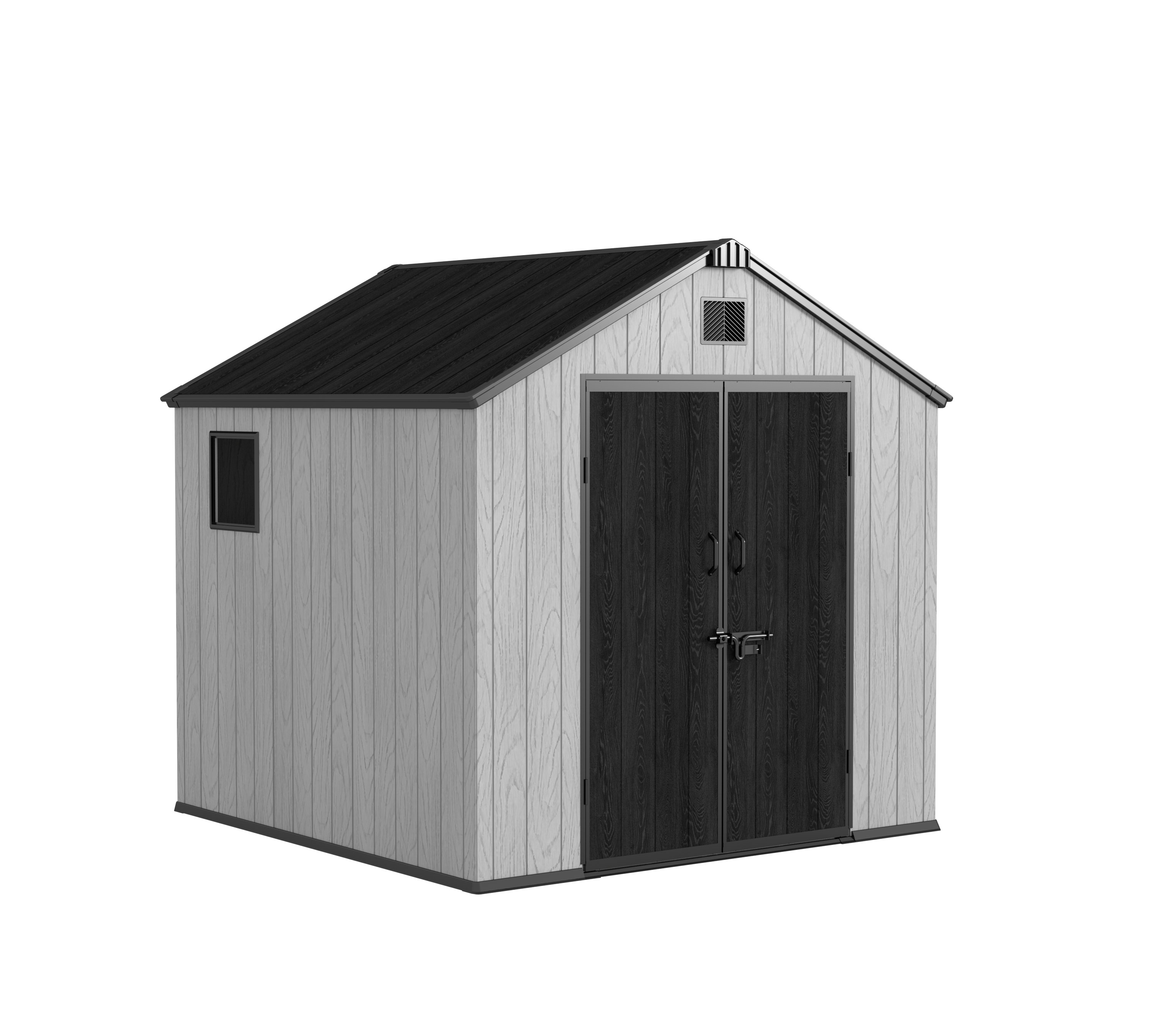
Resin sheds represent the largest footprint in the plastic storage category. They handle the items that simply will not fit anywhere else. Primary use cases include housing push mowers, bicycles, snowblowers, and bulk landscaping materials like bags of soil or mulch. They act as a true extension of your garage space.
Wide double-door access allows you to roll heavy equipment directly inside without lifting. High roofs provide ample headroom for standing and moving around comfortably. Sheds are fully capable of housing heavy, oversized equipment while keeping it entirely protected from the elements.
These benefits come with significant implementation hurdles. Sheds require dedicated yard space. You cannot simply drop them onto the grass. They mandate a properly prepared, perfectly level foundation. Their height and square footage often trigger local zoning laws or require formal HOA approval processes before installation can begin.
Understanding the distinction between waterproof and water-resistant is critical when evaluating enclosures. Deck boxes generally utilize an overlapping lid design. The lid extends past the side panels, allowing water to shed outward. This makes them highly water-resistant and excellent at protecting against heavy rain and nightly dampness. Sheds and cabinets rely on sealed seams and overlapping door lips. If assembled incorrectly, driving wind can push moisture through these vertical gaps.
Prolonged sun exposure causes UV degradation. Lower-tier plastics lack sufficient UV inhibitors. Over time, the sun breaks down the chemical bonds in the plastic. The color fades rapidly, and the material becomes brittle. A stray baseball or a dropped tool can easily crack a sun-baked, single-wall panel. Investing in high-grade HDPE mitigates this risk significantly.
Climate suitability also involves evaluating snow load and wind ratings. In northern climates, heavy snowfall accumulates on flat or low-pitch shed roofs. Without proper reinforcement, the plastic roof panels will cave in under the weight. Look for plastic sheds that feature steel-reinforced roof trusses. High-wind areas require sheds with specific anchoring kits to prevent the structure from lifting off its foundation.
Security in plastic enclosures relies heavily on hardware quality. Analyze the hinge construction. Molded plastic hinges wear down over time and can be snapped with moderate force. Premium units utilize stainless steel hardware and metal hinge pins, offering a much higher degree of durability and resistance to tampering.
Evaluate the padlock compatibility across cabinets and sheds. Look for metal hasp designs that align perfectly when the doors close. Maintain realistic expectations regarding security. Plastic enclosures can still be breached by brute force regardless of the lock quality. A heavy-duty padlock will not stop a thief equipped with a reciprocating saw or a crowbar. These units deter crimes of opportunity, not determined break-ins.
For package security, the rising trend involves using lockable, low-profile deck boxes on front porches. Homeowners leave the box unlocked or provide a combination code in their delivery instructions. The courier places the delivery inside and secures the lock. A discreet, lockable deck box keeps deliveries out of direct view and can help deter opportunistic package theft.
Buyers frequently encounter discrepancies between advertised exterior footprint and actual internal storage volume. Manufacturers list the outermost dimensions, including roof overhangs and base flanges. The interior usable space is always smaller. Wall thickness, especially in double-wall models, consumes several inches of internal width. Molded shelving tracks and reinforced corners further reduce the functional capacity.
Always measure your largest items before purchasing. If you plan to store a push mower, measure its total length including the handle. Compare that measurement strictly against the manufacturer's listed interior dimensions. Consider scalability. Some manufacturers offer modular systems or matching product lines. Starting with a cabinet and later adding matching deck boxes ensures a cohesive aesthetic as your storage needs expand.
The primary driver of performance in resin enclosures is the wall construction. Single-wall units feature one layer of molded plastic. They are lightweight and easy to move. However, they warp easily under heat and offer minimal structural support. Double-wall construction features an inner and outer layer of plastic with an air gap or structural webbing between them. This significantly improves the structural integrity.
Double-wall construction improves panel rigidity and load distribution, helping reduce deformation under normal use. Its internal air spaces can also provide some thermal insulation compared with a comparable single-wall design. This translates to better long-term value. When evaluating the overall investment, you must also factor in the labor and materials required for shed foundations. A deck box is ready out-of-the-box. A shed requires gravel, concrete, or treated lumber to build a proper base.
Vetting durability requires careful research. Do not rely solely on manufacturer claims. Filter online customer reviews to identify authentic feedback. Look specifically for reviews updated after a year of use. Search for keywords like "warping," "leaking," or "heavy-duty performance." This reveals how the unit holds up to actual seasonal changes rather than just its ease of initial assembly.
Assembly methods vary drastically between categories. Many deck boxes utilize snap-together construction. The panels feature interlocking tabs that click into place with minimal effort. Snap-together deck boxes are generally quick to assemble and often require only basic tools or no tools at all. This makes them highly appealing for quick weekend organization projects.
Resin sheds and heavy-duty cabinets rely on hardware-secured assembly. They require driving dozens of screws into pre-drilled or self-tapping locations. Shed assembly is rarely a solo job. It often requires two people and 4 to 8 hours of dedicated labor. One person must hold the large panels plumb while the other secures the hardware.
Proper assembly demands standard tools. Gathering the right equipment beforehand prevents frustration and damaged components.
Power drill with adjustable torque: Essential for driving screws without stripping the plastic threads.
High-quality spirit level: Ensures the base and walls remain perfectly plumb during construction.
Rubber mallet: Used for tapping interlocking panels into place without cracking the resin.
Step ladder: Required for installing roof panels and securing overhead trusses on tall sheds.
Enclosure Type | Average Assembly Time | Personnel Required | Tool Requirements |
|---|---|---|---|
Deck Box | 15 - 30 Minutes | 1 Person | None (Snap-together) or Manual Screwdriver |
Storage Cabinet | 1 - 2 Hours | 1 to 2 People | Power Drill, Level, Rubber Mallet |
Resin Shed | 4 - 8 Hours | 2 People Minimum | Power Drill, Level, Mallet, Step Ladder |
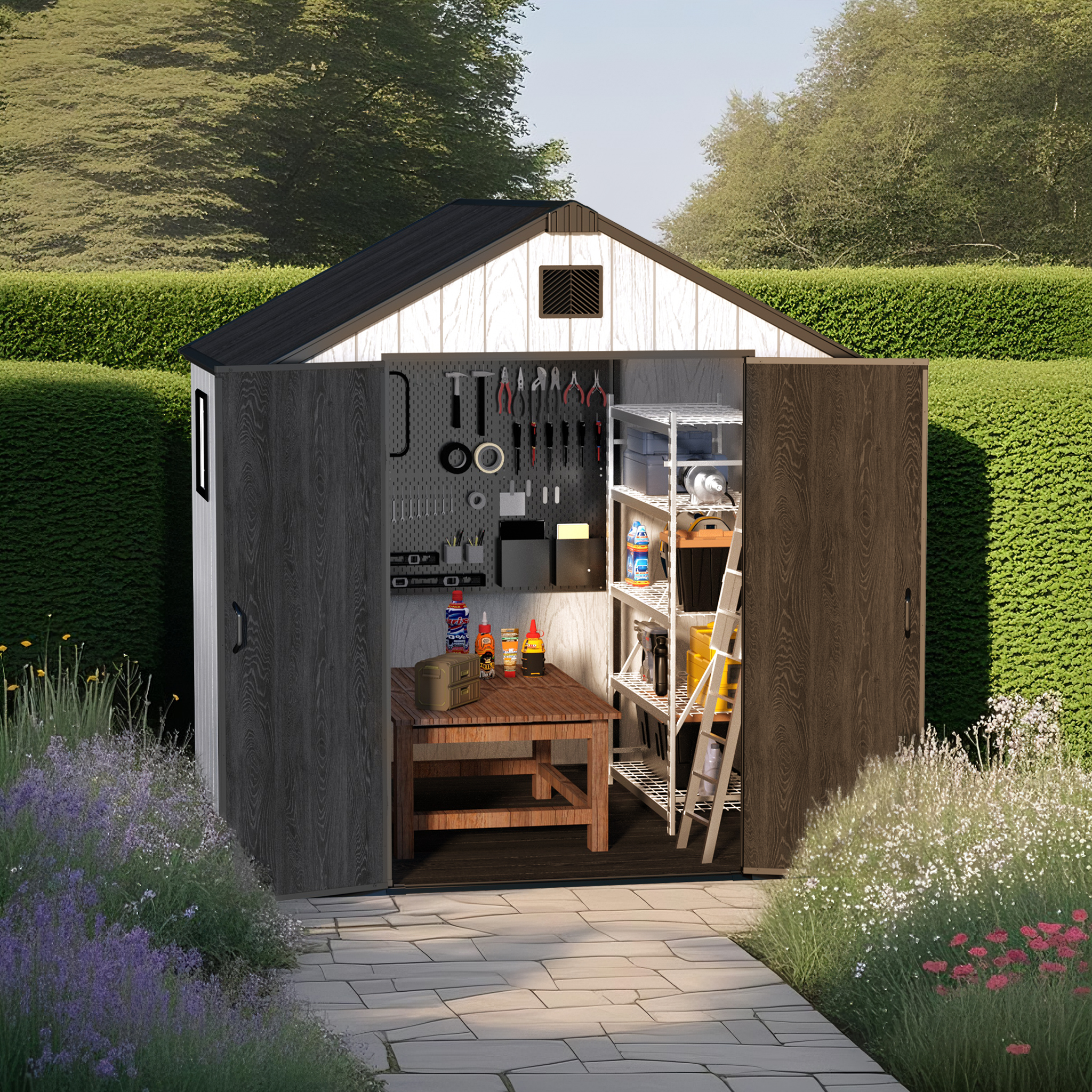
The most common failure point for cabinets and sheds is an improper foundation. Placing these structures on uneven ground causes immediate structural stress. The base twists to follow the contour of the ground. This translates up the walls, causing the door frames to skew. The immediate result is door binding. The long-term result is structural failure as the plastic panels pull apart at the seams.
Mitigating this risk requires a perfectly level base. For heavy-duty enclosures, you cannot rely on bare soil. Suitable foundation options include level concrete slabs, properly compacted crushed-stone bases, and structurally adequate wooden decking, provided the selected base meets the shed manufacturer's support requirements. The foundation must be entirely flat and rigid enough to support the weight of the shed and its contents without settling over time.
Installing a large shed introduces regulatory risk. Municipalities enforce setback rules, dictating how close a structure can sit to your property line. Neighborhoods governed by HOAs often have strict height restrictions, color requirements, and material mandates. Violating these rules results in forced removal of the structure.
Mitigate this risk through proactive research. Measure your fence lines and map out the exact proposed location. Consult your local municipal bylaws and HOA covenants before purchasing sheds or tall cabinets. Submitting a simple dimensional drawing for pre-approval saves you from post-installation disputes.
Outdoor enclosures face constant environmental threats. Rodents seek shelter during colder months. They can easily chew through thin, single-wall plastics if they detect food or nesting materials inside. Tightly sealed units trap ground moisture and ambient humidity. This trapped moisture ruins textiles, rusts metal tools, and promotes mold growth.
To mitigate pest infiltration, select models with heavy-duty, integrated floor panels that leave no gaps at the base. Ensure the doors feature overlapping lips to block entry points. To combat trapped humidity, look for units with passive ventilation screens. These vents allow air circulation while keeping rain out. Never store damp cushions inside a sealed box; always allow them to dry completely in the sun first.
To ensure you select the exact enclosure for your exterior space, follow these immediate next steps:
Measure your largest items: Record the exact length, width, and height of the biggest piece of equipment you plan to store, and compare it strictly against the manufacturer's interior dimensions.
Verify your ground level: Use a long spirit level on your intended installation site to determine if you need to build a concrete or gravel foundation before purchasing a shed or cabinet.
Check local regulations: Review your HOA guidelines and municipal setback rules to confirm maximum allowable heights and property line distances.
Select your hardware: Purchase a heavy-duty, weather-resistant padlock that matches the hasp dimensions of your chosen enclosure to secure your items immediately after assembly.
A: Most deck boxes are highly water-resistant, not completely waterproof. They utilize overlapping lid designs that effectively shed heavy rain and protect contents from morning dew. However, driving rain from severe storms or standing water at the base can sometimes penetrate the seams. They are perfect for cushions and toys, but highly sensitive electronics should be stored indoors.
A: Most resin storage sheds require a stable, level foundation to support the floor and prevent frame distortion. Installing a shed on uneven or poorly prepared ground can twist the base and cause problems with panel alignment and door operation. This misalignment travels up the walls, resulting in doors that will not close, warped panels, and eventual structural failure. Concrete pads, compacted gravel, or level decking are required.
A: Painting HDPE or polypropylene is difficult because standard paint lacks adhesion on these slick, non-porous surfaces. If you must paint them, thoroughly clean the surface, lightly sand it for texture, and use specialized plastic-bonding spray paints. Even with proper prep, the paint may eventually chip or peel due to weather expansion.
A: Reduce insect entry by assembling the deck box correctly, checking that the lid closes securely, and keeping the interior clean and dry. Where the design permits, suitable weatherstripping can help reduce gaps without blocking drainage or ventilation. Additionally, placing natural deterrents like cedar blocks or peppermint oil pouches inside helps repel spiders and insects.
A: The service life of resin outdoor storage depends on material formulation, UV protection, wall construction, climate exposure, and maintenance. UV-stabilized products with reinforced panels generally withstand outdoor conditions better than lightweight units without adequate weather protection. Check the manufacturer's warranty and material specifications when comparing long-term durability.
A: High-quality sheds feature UV inhibitors and double-wall construction, preventing them from melting or warping in standard summer heat. However, lower-grade, single-wall plastics lack structural rigidity. When exposed to direct, high-temperature sunlight for prolonged periods, these thinner panels can soften, bow outward, and permanently warp.
A: Yes, deck boxes are excellent for securing e-commerce deliveries. Place a low-profile deck box in an accessible porch location and include clear delivery instructions asking couriers to leave packages inside. For added security, use a purpose-designed delivery box or a locking mechanism compatible with the delivery process.


