
Outdoor Storage
Views: 0 Author: Site Editor Publish Time: 2026-11-27 Origin: Site


When comparing resin vs wood vs metal outdoor storage, resin is a practical choice for moisture resistance and low maintenance, wood offers greater customization and traditional appearance, while metal provides durable, noncombustible panels and suitable options for secure equipment storage. The best outdoor storage material depends on your climate, structural requirements, maintenance expectations, and the items you need to protect. Homeowners struggle to balance initial budgets, aesthetic desires, and local climate realities when investing in a permanent or semi-permanent outbuilding. You need a solution that works with your property, not against it. The choice between resin vs wood vs metal outdoor storage is not about finding a universally perfect material. It involves aligning specific chemical and physical properties with your maintenance tolerance and environmental conditions. You must evaluate how each material reacts to moisture, sunlight, and heavy use over time. By understanding these structural realities, you can build a secure, long-lasting space for your tools, mowers, and seasonal gear without facing unexpected replacement projects a few years later.
Resin: Offers the lowest maintenance overhead, clean interior finishing, and high moisture resistance, but may suffer from structural warping or color fading in extreme, prolonged UV exposure.
Wood: Provides unmatched aesthetic customization, natural insulation, and structural longevity, but demands strict, ongoing maintenance to prevent rot, fungal decay, and pest infestations.
Metal: Delivers superior security, fire resistance, and pest immunity at a lower price point, but requires proactive rust mitigation and insulation to manage interior condensation and heat.
Table of Contents
Local weather patterns dictate material viability. Heavy snow loads require roof framing, connections, and load-bearing walls designed to support the applicable local roof snow loads, including potential snow accumulation and drifting. High humidity environments accelerate fungal growth in timber and oxidation in steel. Coastal salt air aggressively attacks untreated metal, requiring specialized galvanized coatings. Extreme UV index environments break down synthetic polymers over time, causing plastics to chalk and crack. You must match your structural material to the specific environmental threats in your region.
Consider the microclimate of your specific yard. A shaded, damp corner behaves differently than a spot exposed to direct afternoon sun. Structures placed under heavy tree canopies face constant bombardment from falling branches, acidic sap, and trapped moisture. Structures in open fields must withstand high wind uplift forces, requiring heavy-duty earth anchors. Evaluating these site-specific factors prevents premature material degradation.
Contrast set-and-forget expectations with the reality of annual upkeep requirements. Every structure requires some level of attention, but the labor intensity varies wildly. Some materials only need a quick pressure wash every spring to remove surface algae. Others demand scraping, sanding, priming, and painting every few years to maintain their weatherproofing. You must honestly assess how many weekends you are willing to dedicate to structural maintenance.
Neglecting maintenance accelerates failure. Skipping a rust-proofing treatment on a scratched metal panel leads to structural holes within a single season. Ignoring peeling paint allows moisture to penetrate framing lumber, inviting carpenter ants. If you prefer a hands-off approach, you must select materials engineered for passive durability rather than those requiring active preservation.
Municipal zoning codes often dictate what you can build. Many local governments restrict the size, height, and placement of permanent structures, enforcing strict setback rules from property lines. Homeowner associations frequently enforce rigid aesthetic guidelines, requiring outbuildings to match the primary residence's siding and roof shingles. Always verify these regulations before pouring a foundation or ordering materials to avoid forced tear-downs.
Evaluate the required level of security for the stored contents. Storing high-value power tools, riding mowers, or expensive recreational gear requires heavy-duty doors, reinforced hinges secured with carriage bolts, and tamper-proof lock hasps. Basic garden supplies and seasonal decorations require less fortified protection. Match the structural security of the outdoor storage unit to the replacement value of the items inside.

High-density polyethylene (HDPE) and vinyl offer inherent resistance to rot, rust, and insect damage. Moisture cannot penetrate the synthetic panels. Termites and carpenter ants have no interest in consuming plastic. This immunity makes resin an excellent choice for damp environments, low-lying yards, or areas prone to heavy rainfall where traditional materials would quickly deteriorate.
Resin sheds offer smooth, finished interior walls. You will not find exposed splinters, sharp metal edges, or rough framing lumber inside. This clean interior finishing eliminates the need for interior drywall or paneling. Cleaning the unit simply involves sweeping it out or hosing down the plastic floor and walls, making it ideal for storing messy gardening supplies or pool chemicals.
The lower barrier to entry for DIY installation appeals to many homeowners. Resin components weigh significantly less than heavy timber or steel sheets. The modular construction relies on blow-molded or twin-wall panels that snap or screw together with basic hand tools. This portability also means you can disassemble and relocate the structure if you move to a new property.
Modern manufacturing techniques incorporate advanced UV inhibitors into the plastic mixture. These chemical additives delay degradation and prevent immediate cracking under harsh sunlight. While no plastic is entirely immune to the sun, contemporary resin formulations perform significantly better than the brittle plastics used in older generations of outdoor structures.
Thermal expansion presents a significant challenge. Extreme temperature fluctuations cause plastic panels to expand and contract daily. In regions with freezing winters and blistering summers, this continuous movement risks structural shifting. Panels may warp, causing doors to misalign and roof seams to separate, which compromises weather resistance and allows pests to enter.
Plastic hinges and lightweight panels offer less resistance to forced entry compared to steel or heavy timber. Intruders can often bypass standard resin locking mechanisms with basic leverage tools or by simply drilling out the plastic hinge pins. If you plan to store expensive machinery or tools, you must upgrade the security hardware or choose a more robust structural material.
While resin does not rot or rust, its long-term durability depends on UV stabilization, temperature exposure, and structural design. Over a 10 to 15-year horizon, the material can become brittle, stain from environmental fallout, or permanently fade. Unlike other materials, you have limited options for restoration. You cannot easily sand and repaint a degraded plastic panel to restore its original structural integrity.
Wood provides unmatched architectural integration. You can easily match the storage unit to existing property aesthetics. Contractors can apply the exact same exterior paint, architectural roof shingles, and lap siding used on your primary home. This seamless visual integration often satisfies strict HOA requirements and enhances overall property appeal, making the structure look like a natural extension of the house.
The ease of modifying wood offers incredible structural customization. You can easily add heavy-duty shelves, pegboards, and heavy hooks directly to the interior studs. The superior load-bearing capacity of 16-inch on-center 2x4 or 2x6 framing easily handles heavy snow accumulations on the roof. You can customize the interior layout exactly to your workflow needs without worrying about panel collapse.
Wood has lower thermal conductivity than metal, helping reduce heat transfer through solid timber components. However, interior temperature stability and condensation control also depend on roof construction, ventilation, and moisture management. A well-ventilated wooden shed can provide a suitable environment for storing tools and other moisture-sensitive items. Storing sensitive items, such as untreated metal tools, electronics, or cardboard boxes, is generally safer in a well-ventilated wooden environment.
The continuous risk of moisture damage requires constant vigilance. Termites, carpenter ants, and wood-boring beetles actively seek out untreated timber. Fungal rot develops quickly if the wood remains exposed to standing water or direct soil contact. You must maintain a strict barrier between the wooden framing and the ground moisture using pressure-treated skids and proper drainage.
Owning a wooden structure involves recurring labor. You must commit to repainting or re-staining the exterior siding every three to five years using high-quality exterior acrylic latex or oil-based stains. Fascia boards, corner trim, and exposed framing require regular inspection and occasional replacement. You must constantly caulk seams and seal end-grains to prevent water infiltration.
The flammability of wooden structures presents a specific hazard. Building codes often restrict placing combustible structures directly on property lines. In wildfire-prone regions, local regulations may prohibit wooden outbuildings entirely or require specialized fire-retardant siding. You must exercise extreme caution when storing combustible materials, gasoline, or oily rags inside a timber frame.
Galvanized steel and aluminum serve as the standard for storing high-value equipment. Heavy-gauge metal offers exceptional resistance to forced entry. Intruders cannot easily kick through a steel wall or pry open reinforced metal doors. This material provides peace of mind when securing expensive investments in remote areas of your property where visibility is low.
Metal structures are completely impervious to rodents and wood-boring insects. Mice and rats cannot chew through steel panels to build nests inside your stored equipment. Metal panels are noncombustible and do not contribute fuel to a fire in the same way as wood or plastic. However, ordinary metal sheds are not automatically suitable for storing flammable liquids or hazardous pool chemicals, which require appropriate containers, ventilation, segregation, and fire-safety measures.
Metal often provides the highest square footage for material efficiency. Prefabricated steel kits utilize thin, corrugated panels that maximize interior space while minimizing material usage. If you need massive bulk storage for large equipment like tractors or ATVs, metal structures deliver expansive footprints without the massive material weight of a comparable wooden building.
Rust remains the primary failure point of metal storage. Coastal areas with high airborne salt concentrations accelerate corrosion rapidly. If the protective galvanized or painted coating gets scratched during assembly or daily use, the exposed steel will begin oxidizing immediately. You must proactively inspect the exterior and apply rust-inhibiting touch-up paint to any exposed metal.
Direct sunlight creates an oven effect inside uninsulated metal structures. The thin panels transfer heat rapidly, causing interior temperatures to soar. When temperatures drop at night, this heat transfer leads to high risks of interior condensation. The roof panels will sweat, dripping water directly onto your stored goods. Metal structures often require aftermarket insulation and active ventilation to perform well.
Thinner gauge metal panels are highly susceptible to denting. Hailstorms, falling tree branches, or accidental impacts from lawnmowers easily compromise the structural aesthetics. Severe dents can crack the rust-resistant coating, inviting corrosion. You must carefully consider panel thickness, opting for 29-gauge or thicker steel when selecting a metal unit for high-traffic or storm-prone areas.
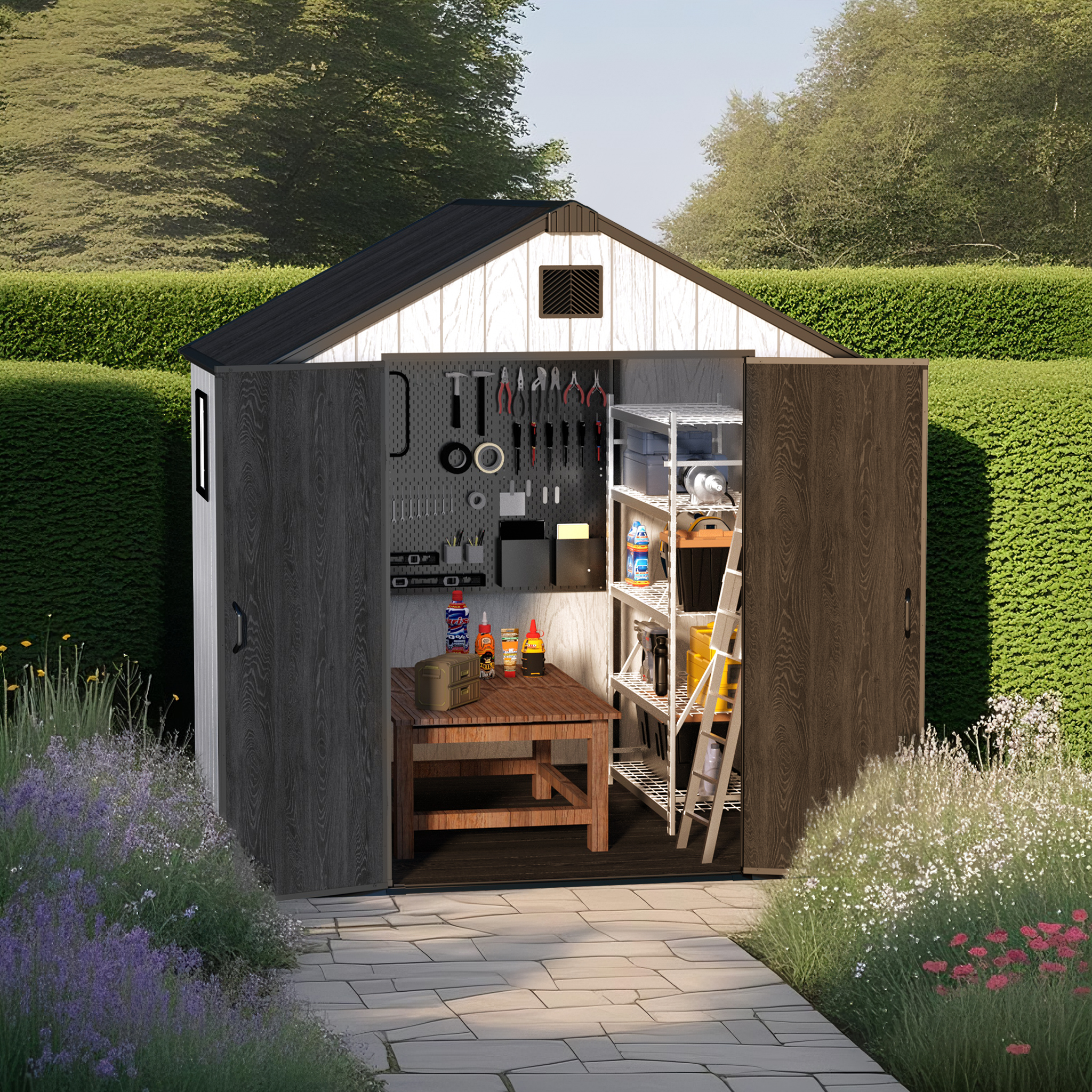
Evaluating the 10-year outlook reveals distinct material behaviors. Resin structures will likely show signs of UV fading and potential brittleness, especially in desert climates. The structural integrity remains intact against moisture, but the aesthetic finish degrades. Extreme cold makes the plastic panels vulnerable to impact cracking from errant baseballs or falling ice.
Metal structures maintain their core structural integrity longer if you successfully mitigate rust. However, in humid or coastal environments, a 10-year-old metal unit often shows significant surface corrosion at the base track and around self-tapping screws. Without diligent scratch repair and fastener replacement, rust holes will compromise the weatherproofing.
Well-built wooden storage structures can provide decades of service when their protective coatings, roof coverings, and drainage systems are properly maintained. However, prolonged moisture exposure and neglected repairs can accelerate fungal decay, damage structural components, and shorten service life. Wood demands the most active participation to achieve its maximum lifespan.
The foundation dictates the success of the entire project. Wood requires a robust concrete pad, deep concrete footings, or a heavy-duty treated skid foundation resting on compacted gravel. The heavy framing demands a base capable of supporting immense static weight without settling over time.
Metal requires secure anchoring to prevent wind uplift. Because metal structures are relatively lightweight compared to their surface area, they act like sails in high winds. You must bolt the metal base rail directly to a concrete slab using expansion anchors or use deep earth auger anchors to secure the frame to the ground.
Resin requires a perfectly flat, level surface. If the foundation dips or crowns even slightly, the rigid plastic panels will not align correctly during assembly. A warped base causes resin doors to jam, roof panels to separate, and weather seals to fail. You must invest heavily in leveling the ground, often using a timber frame filled with screeded gravel, before unboxing a resin kit.
Feature | Resin | Wood | Metal |
|---|---|---|---|
Moisture Resistance | Excellent (Impervious) | Poor (Requires sealing) | Moderate (Prone to rust) |
Pest Resistance | Excellent | Poor (Vulnerable to termites) | Excellent |
Natural Insulation | Low | High | Very Low |
Security Level | Low to Moderate | High | Very High |
Maintenance Effort | Low (Wash only) | High (Paint/Stain/Caulk) | Moderate (Rust prevention) |
An uneven base guarantees structural problems regardless of the material you choose. When resin panels sit on an uneven grade, the interlocking seams stretch and separate, allowing rain to penetrate. Wood structures placed directly on soil will wick moisture upward through capillary action, rotting the floor joists within a single season. Metal doors will bind and jam if the base rail twists over a bumpy foundation.
Mitigate these risks by preparing a proper site. Prepare a stable, level foundation that provides adequate support and drainage for the selected storage structure. Suitable options include properly compacted crushed-stone bases, structurally supported timber platforms, or concrete slabs. The base dimensions, anchoring, and drainage details should match the shed's design and site conditions. For heavier structures, pour a reinforced concrete slab with thickened edges.
Metal structures suffer severely from moisture buildup. The temperature differential between the cold metal roof and the warmer interior air causes condensation to form rapidly. This dripping water rusts tools, ruins cardboard, and promotes mildew on stored fabrics. You must actively manage the interior climate to protect your investments.
Control ground moisture through proper site drainage and a foundation-specific moisture barrier where appropriate, particularly beneath concrete slabs or enclosed floor systems. Add ridge vents at the roof peak and soffit vents at the eaves to ensure continuous cross-ventilation. In climates with frequent condensation, properly installed rigid foam insulation or closed-cell spray foam can reduce heat transfer and moisture accumulation on metal surfaces. Effective insulation must be combined with suitable ventilation, sealed joints, and appropriate moisture control.
Establish a realistic maintenance schedule immediately after installation. For wood, inspect the exterior caulking around windows and doors every fall before the freezing weather arrives. Re-apply water-repellent stains or exterior paint every three years, paying special attention to the bottom edge of the siding where water splashes up from the ground.
For metal, conduct a thorough visual inspection every spring. Look for scratches, dents, or areas where the factory coating has chipped. Lightly sand any surface rust, clean the area with a degreaser, and apply a high-quality, rust-inhibiting exterior metal paint. Check the neoprene washers on roof screws to ensure they haven't dried out and cracked. For resin, wash the exterior twice a year with a mild detergent and a soft brush to remove dirt, algae, and environmental pollutants that can stain the plastic.
There is no universal winner in the material debate. The best outdoor storage material is strictly dictated by the intersection of your local climate, available footprint, and personal willingness to perform ongoing maintenance. You must prioritize the features that align with your specific property constraints and storage needs.
Follow this shortlisting logic to make your final decision:
Choose Resin for high-moisture environments, clean interior finishes, and zero-maintenance preferences.
Choose Wood for aesthetic matching, heavy-duty customization, and natural insulation, provided the maintenance time exists.
Choose Metal for maximum security, fire resistance, and bulk storage, provided you address ventilation and insulation requirements.
Take these actionable next steps before making a purchase:
Measure your available footprint and mark the exact dimensions on your lawn using stakes and string to visualize the spatial impact.
Check your local HOA covenants and municipal zoning guidelines for specific material restrictions, setback rules, and height limits.
Evaluate your site grading and select a foundation strategy that matches your chosen material's base requirements.
Inventory the items you plan to store to determine the necessary door width, roof height, and interior load-bearing requirements.
A: Well-maintained wood and corrosion-protected steel can provide long service life, while UV-stabilized resin offers durable, low-maintenance outdoor storage. The longest-lasting option is determined by construction quality, climate exposure, protective treatments, and maintenance rather than material alone.
A: The plastic panels themselves are entirely waterproof, but the assembled structure is only water-resistant. Heavy driving rain can sometimes penetrate the interlocking seams, roof joints, and ventilation grates. Proper foundation leveling minimizes panel separation and improves overall weather resistance.
A: You must control ground moisture and improve airflow. Reduce condensation by controlling ground moisture, providing effective ventilation, and limiting contact between humid interior air and cold metal surfaces. Depending on the shed design, this can include a suitable foundation moisture barrier, roof or wall vents, and properly installed insulation with sealed joints.
A: Yes, prolonged exposure to direct sunlight causes UV degradation. While modern high-density polyethylene incorporates advanced UV inhibitors to slow this process, it does not entirely eliminate fading, chalking, or eventual brittleness over a 10 to 15-year period.
A: Yes, but it requires specific techniques. Metal requires wire-brushing rust spots and applying specialized rust-inhibiting primers before painting. Resin is notoriously difficult to paint; you must thoroughly clean the plastic and use specialized plastic-bonding spray paints designed to flex with the material.
A: For cold climates and heavy snow, prioritize the shed's rated roof snow load, structural supports, and anchoring system rather than material alone. Well-designed timber framing and reinforced metal structures can both provide substantial snow-load capacity, while resin sheds should be checked against their specified snow-load ratings and cold-weather performance.


