
Outdoor Storage
Views: 0 Author: Site Editor Publish Time: 2026-11-28 Origin: Site


Organizing outdoor tools and garden equipment starts with grouping items by function and frequency of use, keeping long-handled tools on wall-mounted racks, and placing smaller accessories in labeled containers. Practical outdoor tool storage ideas also include heavy-duty shelving for bulky supplies and weather-resistant cabinets or sheds for equipment that needs protection. A well-planned outdoor tool storage system keeps frequently used items accessible while reducing clutter, moisture exposure, and accidental damage. They often rely on ad-hoc storage that fails to scale as tool collections grow or fails to protect metal components from ambient moisture. Shoving rakes into a corner damages the tines and creates a tripping hazard. Moving from a chaotic garage or shed to a streamlined system requires evaluating structural storage solutions based on weight capacity, material durability, and workflow efficiency. You need a setup that handles heavy loads and resists harsh weather. This guide breaks down how to evaluate, select, and implement professional-grade systems using practical outdoor tool storage ideas.
System Scalability: Effective outdoor tool storage relies on modular systems (like track walls or adjustable heavy-duty shelving) that can adapt to changing seasonal inventories.
Environmental Protection: The primary ROI of a dedicated storage system is rust and degradation prevention, requiring strict moisture control and pre-storage maintenance protocols.
Vertical Optimization: Maximizing wall space through specialized mounting hardware keeps high-frequency tools accessible while preserving valuable floor space for heavy machinery.
Load-Bearing Realities: Selecting storage infrastructure must be dictated by the aggregate weight of your equipment—standard pegboards fail under the weight of motorized tools or bulk soil bags.
Table of Contents
Storage environments dictate the lifespan of your equipment. A sealed garage provides different baseline protection than an exposed deck box or an uninsulated wooden shed. You must evaluate ambient humidity and daily temperature fluctuations. Rapid temperature changes cause condensation on metal tool heads. This moisture accelerates rust on shovels, shears, and mower blades.
Regional climate realities dictate material choices. High-humidity coastal areas demand powder-coated steel or heavy-duty resin hardware. Salt spray destroys bare metal in weeks. Desert climates require UV-resistant plastics to prevent storage bins from becoming brittle and shattering. Define your weatherproofing needs before building or buying any enclosure. Waterproof seals and heavy-duty rubber gaskets are non-negotiable for freestanding outdoor boxes. If water gets in, it stays in, turning your storage box into a rust factory.
A functional storage layout balances daily workflow with safety protocols. High-frequency tools like pruners, trowels, and hand weeders require open-access storage. Place these items at ergonomic heights, typically between waist and shoulder level. You should not have to bend over or use a step stool to grab a hand trowel.
Hazardous equipment demands strict security. Chainsaws, chemical fertilizers, and sharp edging blades require lockable, secure enclosures to prevent accidents. Establish a strict zoning strategy for your space.
Position heavy items like 50-pound soil bags on bottom shelves to lower the center of gravity.
Store sharp edges facing the wall or inside protective leather sheaths.
Keep primary walkways completely clear of tripping hazards like hoses or thick extension cords.
Store hazardous garden chemicals in their original labeled containers inside a secure, suitable storage cabinet, keeping heavy containers low and separating incompatible products.
Structural failure happens when you underestimate equipment weight. You must calculate the static load of your heaviest items. Bags of potting soil, motorized edgers, and riding mower attachments exert massive continuous force on shelving and wall anchors. Never guess the weight capacity of a storage unit.
Establish baseline load-bearing requirements before installation. Wall-mounted racks must be secured to structural framing or suitable load-bearing surfaces using anchors rated for the wall material and expected tool weight. Drywall anchors or toggle bolts will rip out of thin shed paneling under the weight of a gas trimmer. Shelving brackets need reinforced steel gussets to prevent bending under sustained loads. Freestanding units should feature adjustable leveling feet. Shed floors settle over time. Leveling feet maintain stability on uneven concrete or plywood floors, preventing the entire rack from tipping forward.
Organization starts with a comprehensive inventory audit. Empty your current storage space completely. Pull everything out onto the driveway. Categorize the existing inventory into specific micro-categories. Group digging tools like spades, trenchers, and trowels together. Create a zone for cutting and pruning tools, including loppers, hand clippers, and hedge shears. Isolate weeding implements, watering equipment, and motorized machinery.
Implement a strict point-of-use philosophy. Keep related items in unified storage zones. Store hoses, watering wands, and spray nozzles on the exact same rack. Keep spare spark plugs and trimmer line together in a labeled accessory bin near your gas-powered string trimmer, and store engine oil upright in its original container in a suitable storage area. This eliminates unnecessary searching and reduces workflow friction when you just want to get the yard work done.
Small items create the most visual clutter and disappear quickly. Plant tags, twine, spare blades, and irrigation emitters get lost in a chaotic shed. Create dedicated micro-storage for these consumables. Use clear, heavily labeled plastic bins to maintain visibility while protecting contents from dust and moisture.
Establish a reliable system for soft goods. Garden gloves often end up separated or ruined by mildew. Hang garden gloves in pairs using heavy-duty binder clips or dedicated wire racks. This ensures they dry completely between uses and remain together for the next task.
Use magnetic tool strips for small metal items like replacement utility blades and drill bits.
Store seeds in airtight, moisture-proof glass jars or gasket-sealed plastic containers.
Keep zip ties and plant wire on accessible spool dispensers mounted to the wall.
Use a dedicated peg for safety glasses and ear protection right by the door.
Garden equipment usage fluctuates wildly throughout the year. Design a dynamic storage layout that accommodates seasonal rotation. During summer months, prioritize lawn care tools, hoses, and pruning shears at the front of your storage area. Move snow shovels, ice melt, and winter gear to high shelves or deep corner storage.
Establish transition workflows for changing seasons. End-of-season deep cleaning is mandatory. Drain fuel from gas-powered tools or add fuel stabilizer before winter storage. Clean and oil all hand tools before moving them to their off-season zones. This rotation keeps your active workspace efficient and uncluttered. When the first snow hits, you swap the zones, bringing the winter gear to the front and pushing the lawnmower to the back.
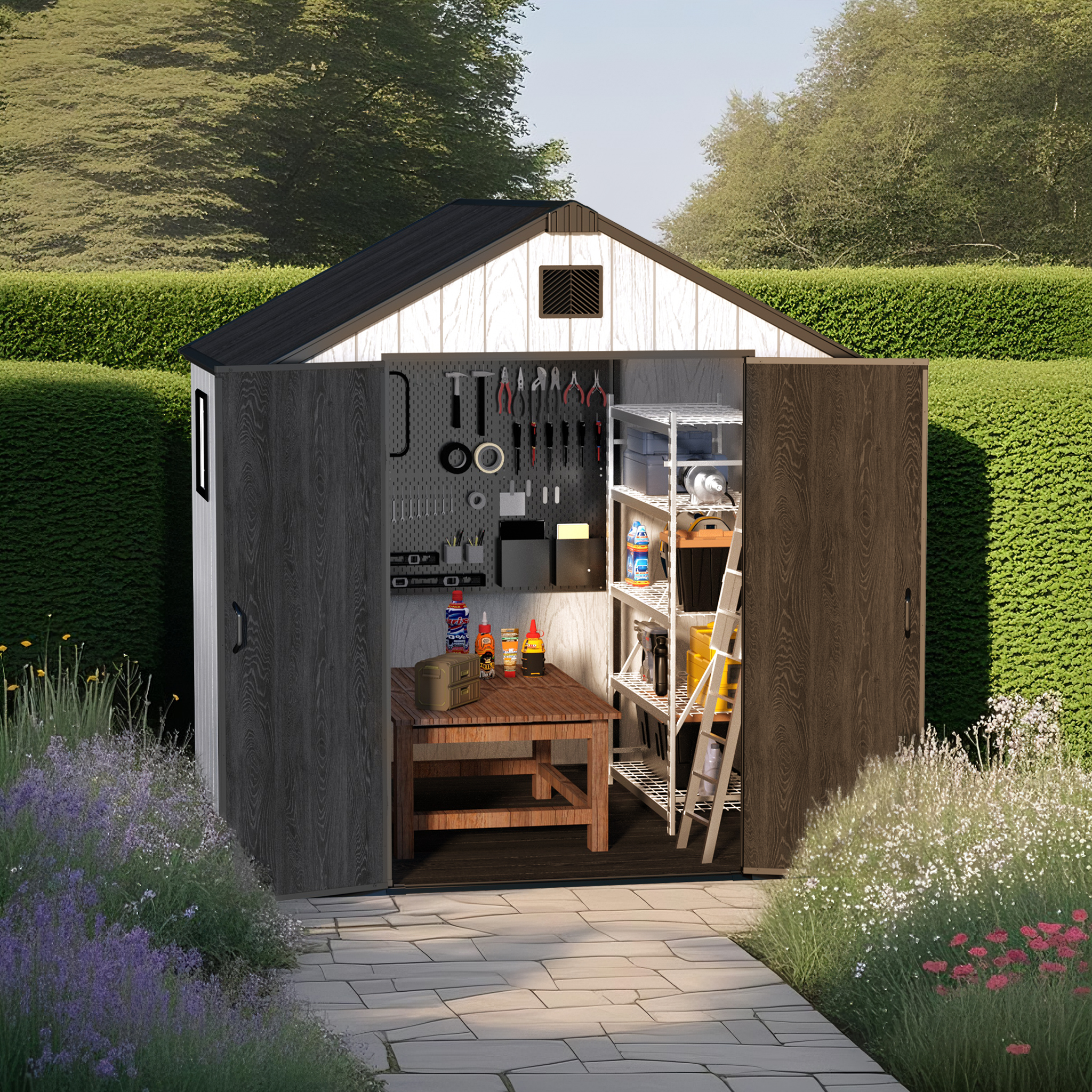
Vertical storage maximizes floor space, but the underlying hardware dictates long-term success. Standard wooden or composite pegboards work well for lightweight hand tools. However, they degrade over time in damp environments. The peg holes wallow out, and the board warps. They fail under heavy loads. Steel track systems provide the structural rigidity necessary for heavy spades, rakes, and motorized trimmers.
Track systems offer superior modularity. You can adjust hook spacing infinitely without drilling new holes or degrading a mounting board. You just slide the hook down the aluminum or steel rail. This adaptability makes track systems one of the most reliable outdoor tool storage solutions available for evolving equipment collections.
Feature | Wall-Mounted Track Systems | Traditional Pegboards |
|---|---|---|
Weight Capacity | High (Supports motorized tools and heavy rakes) | Low to Medium (Best for hand tools and light accessories) |
Modularity | Excellent (Hooks slide easily along the rail) | Moderate (Fixed hole spacing limits placement) |
Moisture Resistance | High (Powder-coated steel or extruded aluminum) | Low (Composite wood warps, swells, and molds) |
Installation | Requires direct mounting to wall studs with lag bolts | Requires furring strips for hook clearance behind the board |
Wall space is finite. Heavy-duty freestanding shelving handles the bulk items that cannot be hung. Industrial wire shelving systems prevent dust and dirt accumulation. The open wire design allows debris to fall through to the floor, keeping the storage surface clean. These units easily support heavy bulk items like potting soil, mulch bags, and large watering cans.
Look for powder-coated steel or high-density resin construction. Bare metal will rust rapidly in damp shed environments. Resin shelving offers complete rust immunity but may bow slightly under extreme weight. Anchor all freestanding shelving units to the wall to prevent tipping. Use heavy-duty steel L-brackets secured to a wall stud. Pulling a heavy bag of fertilizer off the top shelf can easily pull an unanchored rack down on top of you.
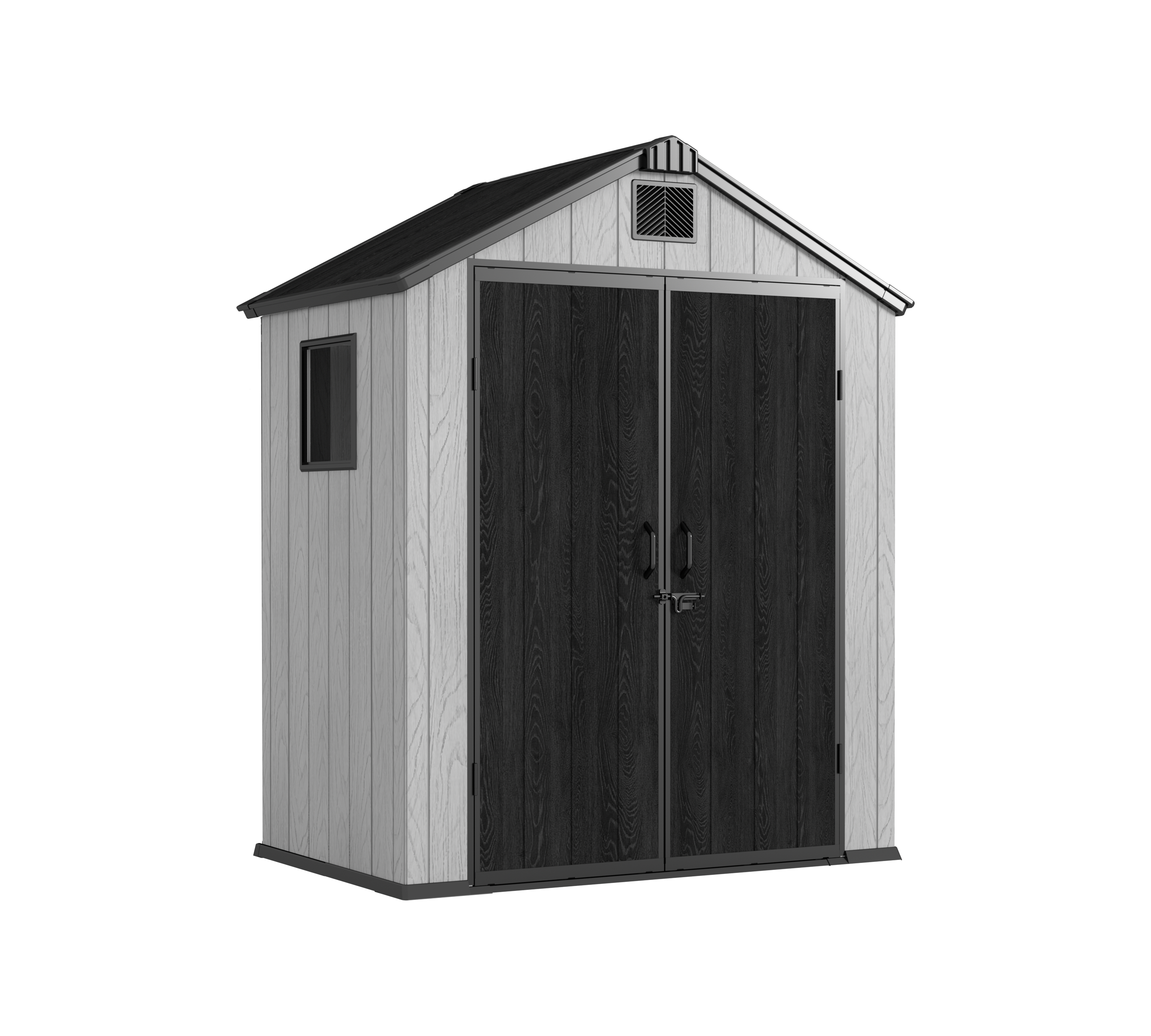
Enclosed structures provide maximum weather protection for sensitive equipment and power tools. A dedicated garden shed acts as a primary staging area. Evaluate the footprint-to-storage ratio before installation. Ensure the shed features integrated floor panels or sits on a raised concrete pad to prevent ground moisture seepage from rusting your equipment.
Resin deck boxes serve as excellent localized storage. Place them near the garden or patio for immediate access to cushions, hoses, or hand tools. Choose boxes with reinforced lids that double as seating. Ensure the box features a padlock hasp for security and overlapping lid lips to keep rain out. A flat lid will pool water, which eventually finds its way inside.
You do not always need expensive commercial systems. Repurposing specific hardware often yields highly efficient storage. Heavy-duty utility hooks hold coiled hoses perfectly. Repurposed tension rods installed under a shelf provide an excellent hanging spot for spray bottles and cleaning supplies. You can also cut PVC pipe into short sections and mount them to the wall to hold long-handled tool grips.
Evaluate durability when repurposing indoor hardware for outdoor environments. Indoor hooks lack the galvanized coating needed to survive shed humidity. They will rust and stain your walls. Use heavy-duty hose chains to manage extension cords and thick hoses. Specialized corner racks utilize dead space effectively, keeping long-handled tools upright and organized without eating up primary wall space.
The material composition of your storage infrastructure determines its maintenance schedule. Wood offers aesthetic appeal and high customizability. You can easily modify wooden shelves or build custom tool racks using scrap lumber. However, wood requires routine sealing, painting, or staining to prevent rot, warping, and pest infestation. Termites and carpenter ants love untreated shed framing.
Resin and high-density plastic are highly weather-resistant. Resin panels do not rust and generally require little maintenance beyond regular cleaning and inspection of hinges, seals, and fasteners. Clean the surfaces with mild soap, water, and a soft brush rather than directing high-pressure water at panel joints. The downside is that cheap plastic becomes brittle under extreme UV exposure or freezing temperatures. Metal structures provide maximum security and structural strength. Galvanized or powder-coated steel resists impacts well. However, metal is highly susceptible to condensation. If the protective coating scratches, rust will spread rapidly across the panel.
Analyze the long-term return on investment when selecting materials. Investing heavily upfront in commercial-grade steel or high-density polyethylene saves money over a decade. Cheaper, low-grade plastic organizers degrade quickly. Replacing cracked bins and bowed shelves every few seasons costs more in the long run.
Factor in the replacement cost of damaged tools. A cheap, leaky shed might save you money initially, but replacing a rusted lawnmower and ruined power tools negates those savings entirely. Prioritize structural integrity and weatherproofing over initial purchase price. Buy the thickest gauge steel or the heaviest resin you can fit in your space.
Storage systems only protect tools that are properly prepped. Returning dirty tools to a rack guarantees cross-contamination and rapid degradation. Remove all soil, sap, and moisture before storing any equipment. Use a stiff wire brush to knock dirt off shovels and spades. Wipe down pruners with a rag soaked in a mild solvent to remove sticky sap.
Establish a routine for lubrication and sharpening prior to long-term seasonal storage. Condition unfinished wooden handles with a suitable wood treatment, such as boiled linseed oil, to help reduce drying and surface cracking. Wipe off excess oil after fifteen minutes. Sharpen pruners and clippers with suitable sharpening stones or tools that preserve their original cutting angles, and sharpen removable mower blades with an appropriate file or grinder before checking blade balance. Apply a light coat of penetrating oil to all exposed metal surfaces to displace moisture and create a protective barrier against rust.
Exposed sharp edges pose a severe safety risk and dull quickly when knocked against other tools. Implement strict protocols for protecting sharpened edges on axes, hoes, and shears. Use dedicated blade guards or thick leather sheaths for cutting tools.
Design your storage layout to protect edges passively. Use slotted racks that suspend tools by the handle, keeping the blade suspended in the air. Never rest a sharpened shovel or axe blade directly on a concrete floor. This blunts the edge immediately and invites moisture wicking from the porous concrete. Mount a dedicated block of wood on the floor if tools must rest vertically.
Enclosed storage spaces trap ambient humidity. Implement passive moisture control strategies to protect your metal equipment. Place large silica gel packs or buckets of moisture-absorbing crystals inside deck boxes and storage cabinets. Replace or recharge these desiccants regularly.
Line steel shelves with specialized rust-inhibiting drawer liners. For larger sheds, install proper ventilation. Gable vents and ridge vents allow damp air to escape, reducing internal condensation. A solar-powered exhaust fan actively pulls humid air out of the shed, keeping your tools dry and rust-free. Install a vapor barrier under the shed floor during construction to block ground moisture from rising into the structure.
Mounting heavy tool racks without securing them to structural studs leads to catastrophic failure. Ripping drywall or shed paneling destroys the wall and damages the falling equipment. Never rely on plastic drywall anchors for heavy outdoor tools. They will shear off or pull straight out of the wall.
Always use a high-quality stud finder before drilling. Use structural fasteners or anchors rated for the mounting surface and the combined weight of the track system and stored tools. If stud spacing does not align with your storage rack, install a wooden ledger board first. Secure a 2x4 horizontally across multiple studs using structural screws, then mount your tool rack directly to the ledger board. This distributes the weight evenly across the wall structure and gives you a solid mounting surface anywhere along the line.
Airtight storage boxes protect against rain but trap internal moisture. Storing damp hoses, wet fabric gloves, or muddy tarps in a sealed resin box leads to severe mold and mildew. The trapped moisture will also rust any metal tools stored in the same container.
Ensure all equipment is completely dry before placing it in enclosed storage. Hang wet tarps and hoses in the sun until all moisture evaporates. Prioritize slatted or ventilated storage solutions for items frequently exposed to water. For items that retain moisture, use storage containers with built-in ventilation or ventilated organizers, and allow equipment to dry completely before placing it in enclosed boxes. Install louvered doors on storage cabinets to promote continuous air circulation.
Conduct a comprehensive tool audit today to purge broken, rusted, or redundant items from your inventory.
Measure your available wall and floor space accurately to determine the exact linear footage needed for a track or shelving system.
Procure a scalable track system rated for your heaviest equipment and install the mounting hardware directly into wall studs using heavy-duty lag bolts.
Implement a strict cleaning and oiling routine before placing any tool onto your newly installed storage racks.
A: The most effective method utilizes vertical wall-mounted track systems. These keep tools off the ground, preventing handle warping and moisture damage. Specialized corner racks also work well for tight spaces. Always secure these systems directly to wall studs to handle the combined weight of shovels and rakes.
A: Clean off all dirt and sap after every use. Apply a light coat of penetrating oil to metal surfaces before hanging them up. Ensure your shed has adequate cross-ventilation to prevent condensation. Use moisture absorbers or silica gel packs in enclosed cabinets to keep ambient humidity low.
A: Yes, high-density resin boxes can withstand winter weather. Ensure they are properly sealed against moisture. Avoid subjecting them to heavy impacts, as plastic becomes brittle in freezing temperatures. Keep the box elevated slightly off the ground to prevent freezing to the patio or deck.
A: The load capacity of a pegboard depends on its material, thickness, mounting method, and hook ratings. Standard fiberboard pegboards are best suited to lightweight hand tools, while heavier equipment requires reinforced panels, dedicated wall hooks, or properly anchored track systems. However, individual peg hooks can only support light hand tools. Heavy items like weed whackers or large spades require direct-to-stud hooks or heavy-duty steel track systems.
A: Vertical storage optimization is the most efficient method. Utilize the full height of your walls with modular track systems. Where the building structure and rack system are rated for overhead storage, use securely mounted ceiling racks for lightweight, infrequently accessed items. This keeps the floor completely clear for heavy machinery like lawnmowers and snowblowers.
A: Yes. Hoses should be completely drained of all water and stored in a shed or garage. Residual water left inside a hose will freeze, expand, and rupture the internal lining. Coil the drained hose loosely on a heavy-duty wall hook to prevent kinks during winter storage.


