
Outdoor Storage
Views: 0 Author: Site Editor Publish Time: 2026-07-27 Origin: Site


Resin storage solutions dominate garages, sheds, and patios because they resist rust, withstand harsh weather, and require zero maintenance. Despite these advantages, structural integrity under heavy loads remains a primary buyer hesitation. When you stack heavy tools, bags of soil, or gallons of paint on plastic shelving, the risk of failure increases. Underestimating your required storage cabinet weight capacity leads directly to shelf sagging, structural warping, door misalignment, and severe safety hazards from collapsed equipment.
Preventing a structural failure requires moving beyond the marketing claims on the box. You must evaluate manufacturer weight ratings, volume-to-weight ratios, structural reinforcements, and environmental factors before committing to a resin unit for high-demand storage needs. Understanding how these cabinets distribute and bear weight ensures your gear stays secure and the cabinet maintains its shape over years of hard use.
Baseline Metrics: Standard resin cabinet shelves typically support 30 to 50 pounds, while heavy-duty, reinforced models can hold 75 to 150+ pounds per shelf.
Floor vs. Shelf Load: The bottom floor panel of a resin cabinet generally has a significantly higher weight capacity than the suspended shelves, making it the required location for items like heavy toolboxes, propane tanks, or large soil bags.
The Span Factor: Shelf width directly impacts load limits; wider shelf spans (e.g., 4 to 8 feet) require aggressive central support or metal reinforcing channels to prevent catastrophic bowing under standard loads.
The Reinforcement Factor: High-capacity resin cabinets rely on steel or aluminum shelf reinforcements and double-wall construction to prevent bowing and warping over time.
Environmental Impact: Ambient temperature and UV exposure directly affect resin rigidity; extreme heat and sun exposure can soften the plastic, severely lowering the effective storage cabinet weight capacity.
Table of Contents
Evaluating a storage cabinet requires differentiating between per-shelf capacity, total cabinet capacity, and floor capacity. Manufacturers often advertise the total aggregate weight the entire unit can hold. This number misleads buyers who plan to store heavy items on a single upper shelf. You must look strictly at the per-shelf rating. The floor capacity always ranks higher because it rests directly on your foundation. Suspended shelves rely entirely on the shear strength of the plastic side walls and shelf brackets.
Many buyers fall into the volume versus weight trap. A unit boasting a 97-gallon or 19-cubic-foot interior capacity sounds massive. Storage volume does not equal weight capacity. High-volume cabinets easily overload if you fill that massive space with dense, heavy items like hardware bins or wet potting soil. Bulky, lightweight items like patio cushions or sports equipment fit perfectly. Always calculate the density of your gear before assuming a large cabinet can hold it all.
The construction method dictates the physical limits of the unit. Standard resin cabinets feature single-wall injection-molded construction with unreinforced plastic shelves. These units work perfectly for pool chemicals, lightweight gardening gear, or sports balls. Heavy-duty models utilize double-wall, blow-molded construction with structural internal ribbing. This design supports power tools, automotive supplies, and heavy brass hose nozzles without buckling under the strain.
You must also understand the reality of manufacturer ratings. Manufacturers test capacity using evenly distributed static loads in temperature-controlled settings. Real-world application involves uneven, concentrated, dynamic loads. Dropping a heavy tool case onto a shelf creates a momentary force far exceeding the static weight of the item. Always apply a 10-15% safety margin on advertised limits to account for real-world use.
To better understand how different resin materials handle weight, review the common plastics used in manufacturing:
Resin Material Type | Structural Rigidity | Typical Load Capacity (Per Shelf) | Best Application |
|---|---|---|---|
Injection-Molded Polypropylene (PP) | Low to Medium | 30 - 50 lbs | Light garage storage, patio cushions, pool toys. |
Blow-Molded High-Density Polyethylene (HDPE) | High (Double-Wall) | 75 - 100 lbs | Power tools, paint cans, heavy gardening supplies. |
Steel-Reinforced HDPE | Maximum | 100 - 150+ lbs | Automotive parts, hardware bins, commercial gear. |
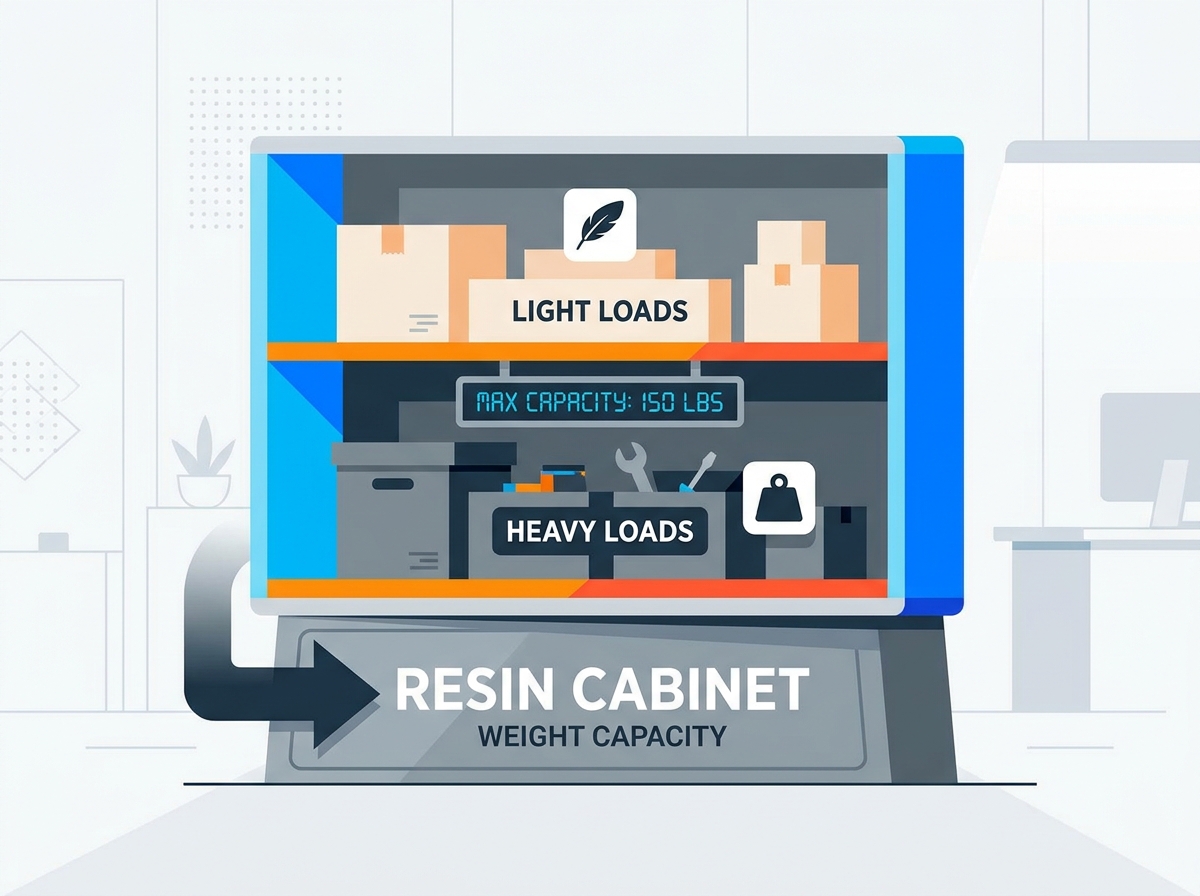
Light to medium loads range from 0 to 40 pounds per shelf. This category includes hand tools, spray bottles, small planters, seasonal decorations, lightweight sports equipment, and basic grill accessories. For these items, basic injection-molded resin cabinets are entirely sufficient. Your primary focus here should be on weather-sealing and UV protection rather than maximum load bearing. The plastic will support these items indefinitely without sagging.
Heavy loads range from 50 to 100+ pounds per shelf. Gallons of paint, power tool cases, bags of fertilizer, hardware bins, and heavy cast iron grates fall into this category. Supporting this weight requires double-wall resin, steel-reinforced shelving, and heavy-duty hinges. Without heavy-duty hinges, the weight shifting inside the cabinet can cause the frame to rack. Racking leads directly to door sag and improper latching.
Extreme loads require floor-level storage. Large Craftsman-style toolboxes, generators, riding mower batteries, and heavy propane tanks should never sit on suspended plastic shelves. These items must be stored on the reinforced bottom floor panel. To prevent the base from cracking under concentrated weight, the cabinet must sit on a perfectly level concrete foundation. An uneven base will cause the heavy items to punch through the resin floor.
Follow this process to audit your gear before purchasing a unit:
Group your items by weight category (light, heavy, extreme).
Weigh the heaviest single item you plan to put on a suspended shelf.
Multiply that weight by 1.15 to establish your required safety margin.
Measure the footprint of your extreme load items to ensure they fit on the bottom floor panel.
Select a cabinet model that exceeds your calculated safety margin per shelf.

Shelf span and width dynamics play a massive role in structural failure. Wider shelves, especially those spanning 4 to 8 feet, suffer from increased bending moments. The center of a wide shelf lacks support, making it the weakest point. Shorter, deeper shelves consistently outperform wider shelves of the exact same material because the load remains closer to the supporting side walls.
Metal reinforcements change the equation entirely. Steel tubes or aluminum channels integrated into the front and rear edges of resin shelves exponentially increase load-bearing capabilities. These metal channels act as rigid spines. They prevent the long-term bowing that naturally occurs when plastic sits under a static load for months at a time.
Wall thickness and the manufacturing process dictate how well the cabinet holds the shelves up. Blow-molded resin creates a hollow, rigid double wall with dead air space, providing excellent vertical strength. Injection-molded resin produces a single wall that is far more flexible. Wall rigidity is critical because it supports the shelf brackets under load. If the walls bow outward, the shelves will slip off their supports and crash down.
Shelf bracketing and locking mechanisms secure the system. Interlocking tabs integrated directly into the side walls offer higher shear strength than separate, adjustable peg-style shelf clips. Integrated tabs distribute the downward force across a larger surface area of the cabinet wall. This distribution reduces the risk of the plastic tearing under heavy weight.
Double-wall construction prevents side-wall blowout under heavy shelf loads.
Steel front-edge channels stop the shelf from smiling or bowing in the center.
Integrated wall tabs provide superior shear strength compared to plastic peg clips.
Shorter shelf spans naturally resist deflection better than wide spans.
Temperature fluctuations introduce the heat factor. Resin is a thermoplastic, meaning it softens when exposed to high heat. Sustained high temperatures in an uninsulated garage, a metal shed, or direct sunlight cause loaded shelves to warp. This softening effectively reduces the safe storage cabinet weight capacity. A shelf rated for 75 pounds at room temperature might only safely hold 40 pounds during a 100-degree summer day.
UV degradation and plastic embrittlement destroy cabinets over time. Prolonged exposure to outdoor sunlight breaks down polymer chains. This makes older resin cabinets brittle and prone to sudden fracturing under weights they once supported easily. If you place a cabinet outdoors, ensure it features high-grade UV inhibitors. Placing it in a shaded area extends its structural lifespan significantly.
Foundation and base stability dictate the performance of the entire unit. A resin cabinet placed on uneven ground will twist under heavy loads. This twisting causes doors to pop open, shelves to lose their structural seating, and weight to distribute unevenly across the base. A perfectly level concrete pad or reinforced wooden deck is mandatory for heavy storage.
Chemical exposure also weakens the structure. While resin is rust-proof, prolonged exposure to certain spilled solvents, automotive fluids, or pool chlorine degrades the plastic. This chemical breakdown weakens the load-bearing base and shelves, leading to unexpected cracking. Always store harsh chemicals in secondary containment trays to protect the resin surfaces.
Choosing resin makes sense for damp environments, coastal areas, or storing corrosive materials. Pool chemicals, fertilizers, and wet yard tools will rapidly destroy metal cabinets through rust and corrosion. Resin ignores moisture entirely. As long as your gear stays within the 50 to 100 pound per shelf limit, a heavy-duty resin unit provides superior longevity in wet conditions.
Upgrading to steel or metal becomes necessary when per-shelf requirements consistently exceed 150 pounds. If you store massive engine parts, solid steel anvils, or hundreds of pounds of hardware, plastic will eventually fail. Furthermore, if the cabinet lives in a high-heat, high-impact industrial environment where forklifts or heavy machinery might bump it, transition your recommendation to industrial welded steel cabinets for guaranteed safety.
Metal cabinets handle point loads better than resin. A heavy, sharp object dropped on a metal shelf might dent it, but it rarely punches through. The same object dropped on a cold, brittle resin shelf can shatter the plastic. Evaluate your working environment and how rough you handle your tools before deciding between the two materials.
Choosing the right storage cabinet weight capacity is just as important as selecting the right cabinet size. By understanding shelf load limits, structural reinforcement, environmental conditions, and proper weight distribution, you can safely store heavy equipment while extending the lifespan of your storage cabinet.
About KENDA
KENDA is a professional manufacturer of outdoor storage cabinets and storage sheds, offering durable resin storage solutions designed for homes, garages, patios, and commercial applications. With weather-resistant materials, reinforced structural designs, and user-friendly installation, KENDA provides reliable storage products that combine long-lasting performance with minimal maintenance.
Check the per-shelf weight rating instead of relying only on the total cabinet capacity.
Store the heaviest equipment on the reinforced bottom floor panel whenever possible.
Install the cabinet on a solid, level foundation to maximize structural stability.
Select reinforced resin or metal cabinets for demanding heavy-duty storage applications.
Before purchasing a storage cabinet, compare shelf capacity, structural reinforcement, environmental conditions, and your actual storage requirements to ensure long-term safety and performance.
A: Standard resin cabinet shelves typically hold between 30 and 50 pounds. Heavy-duty, double-wall models with steel or aluminum reinforcements can support 75 to 100+ pounds per shelf. Always check the manufacturer's per-shelf rating rather than the total cabinet capacity.
A: No. Volume measures physical space, not structural strength. A high-volume cabinet can easily collapse if filled with dense, heavy items like hardware or wet soil. Match the weight density of your items to the structural rating, not just the available space.
A: Yes, but only if placed on the bottom floor panel. Heavy toolboxes should never sit on suspended resin shelves, as the concentrated load will cause the plastic to bow or collapse. Ensure the cabinet sits on a level concrete foundation.
A: Wider shelves suffer from increased bending moments. A long 8-foot span has a much lower weight capacity per linear foot compared to a shorter 3-foot shelf. Wide spans require aggressive metal center supports to prevent sagging under standard loads.
A: Yes, unreinforced plastic shelves will sag under continuous static heavy loads, especially in high-heat environments. Metal reinforcements integrated into the shelf edges prevent this creeping effect and maintain the shelf's rigid structure over time.
A: You can reinforce shelves by adding custom-cut plywood overlays to distribute weight evenly, or by bolting aluminum channels to the front and rear edges. However, modifying the cabinet often voids the manufacturer's warranty.
A: Yes. The floor panel rests directly on your foundation, allowing it to hold significantly more weight than internal suspended shelving. As long as the cabinet sits on a solid, level surface like concrete, the floor can support heavy generators and large tanks.


