
Outdoor Storage
Views: 0 Author: Site Editor Publish Time: 2026-07-27 Origin: Site


Selecting a storage shed material is a multi-decade commitment. Choosing the wrong structural foundation leads to premature weathering, security vulnerabilities, or continuous maintenance cycles. Property owners must balance upfront material constraints and DIY assembly requirements against long-term durability, HOA compliance, and specific load-bearing needs. Moving beyond manufacturer marketing claims, this guide provides an objective, technical evaluation of resin, wood, and metal sheds based on structural integrity and lifecycle maintenance. When evaluating a resin vs wood shed, understanding these core differences ensures your storage solution withstands local environmental stressors while meeting your functional demands.
Wood prioritizes structural integrity and customization: It offers the highest load-bearing capacity for heavy shelving and lofts, but requires strict, ongoing maintenance to prevent rot and pest intrusion.
Resin delivers zero-maintenance longevity: High-density polyethylene (HDPE) or vinyl sheds resist rust, peeling, and rot, offering the fastest DIY assembly, though they severely limit interior customization and structural modifications.
Metal provides budget-friendly security but varies in grade: Galvanized steel offers superior fire and pest resistance at a lower price point, but is highly susceptible to condensation, denting, and long-term rust if scratched.
Foundation dictates lifespan: Regardless of the material chosen, improper site preparation and foundational moisture control will accelerate structural failure, panel warping, and door misalignment across all three categories.
Table of Contents
Before comparing materials, you must establish the operational requirements for your backyard structure. Differentiating between basic dead storage for lawnmowers and active workspaces like potting sheds dictates the necessary level of insulation and electrical routing. A simple tool lockup requires vastly different structural framing than a climate-controlled workshop. You need to know exactly what will go inside the building before you pour a single yard of concrete or level a gravel pad.
Evaluate local climate extremes carefully. Heavy snow loads present a severe roof crush risk, demanding specific truss reinforcement. High winds demand robust uplift resistance and heavy-duty ground anchors. Coastal salt air accelerates corrosion on untreated surfaces, destroying thin metal panels in just a few seasons. Intense UV exposure degrades inferior plastics over time, causing them to crack and shatter under minor impacts. Your local environment will immediately disqualify certain materials if you pay attention to historical weather data.
Navigating Homeowner Association bylaws and municipal zoning permits often restricts material choices. Many architectural guidelines require outbuildings to match the primary residence's siding and roofing exactly. You might be forced into building a wood structure simply because your HOA bans exposed metal or plastic panels. Finally, assess how tightly the panels interlock. Proper seal integrity prevents insect, rodent, and water intrusion through seams and door gaps, protecting your stored equipment from nesting pests and moisture damage.
Consider the physical footprint and the access requirements. Double doors are mandatory for riding mowers, while single doors suffice for standard garden tools. The ramp angle, threshold height, and door swing clearance all play into the final material selection, as some materials handle custom door framing better than others.
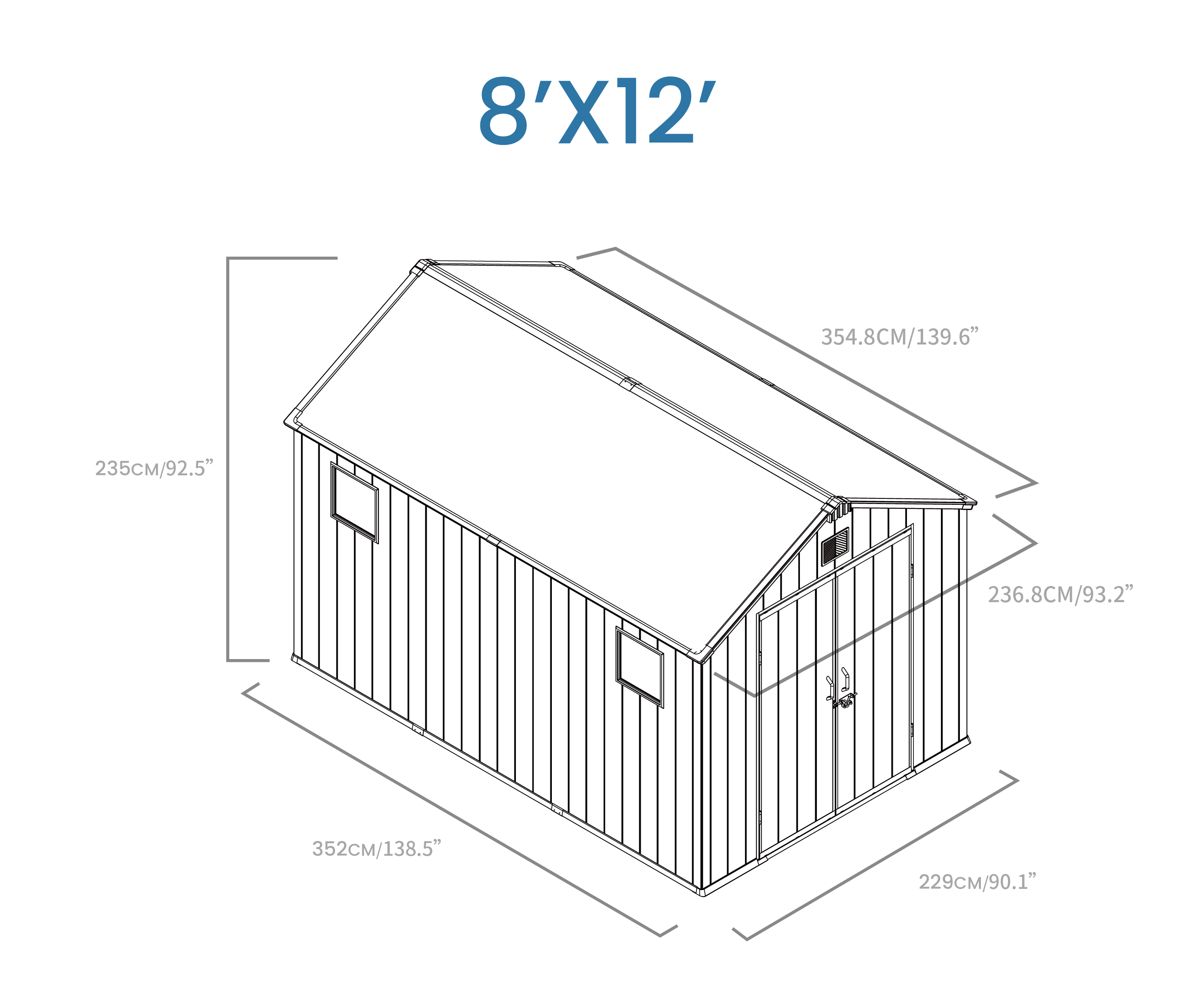
Resin sheds dominate the residential market for their sheer convenience. Material composition varies significantly across brands, differentiating between standard single-wall plastics, high-density polyethylene (HDPE), and vinyl (PVC) reinforced with internal steel framing. When you buy a resin shed, you are buying a highly engineered kit designed for rapid deployment.
Absolute immunity to rust, peeling, rot, and wood-boring insects.
Engineered snap-together panels allow for rapid, homeowner-grade DIY assembly.
Pre-molded floors are often included, blocking rising ground dampness and reducing immediate foundation preparation requirements.
Lightweight components make it easy to transport the kit from the retail store to the backyard without heavy machinery.
Integrated skylights and molded windows often come standard, providing natural light without complex framing.
Weakest structural capacity for aftermarket upgrades. You cannot easily drill into walls for heavy custom shelving without compromising panel integrity.
Vulnerability to extreme temperature fluctuations. High heat causes potential warping, while deep freezes can make standard plastics brittle.
Lighter overall weight requires aggressive anchoring in high-wind zones to prevent structural failure.
Strict sizing and scalability limitations. These units are primarily sold in fixed retail sizes with limited vertical clearance.
Color fading over a decade of intense UV exposure, which cannot be fixed with a simple coat of paint.
Assembly requires a perfectly flat surface. If your concrete pad or gravel base is off by even half an inch, the roof panels will not align with the wall channels. You will spend hours fighting the plastic joints, and the doors will never latch correctly. The floor panels must sit completely flush on the ground to support the weight of heavy equipment; otherwise, the plastic floor will crack under the wheels of a riding mower.
When dealing with resin, you must follow the manufacturer's instructions exactly. There is no room for field modifications. If a panel is damaged during shipping, you cannot patch it with a piece of plywood. You must wait for a replacement part. However, once assembled correctly on a level base, a high-quality HDPE shed provides decades of dry, secure storage with zero maintenance beyond an occasional pressure washing.
Wood remains the gold standard for heavy-duty applications. The material composition typically involves framing lumber, exterior-grade plywood, oriented strand board, and treated siding such as T1-11 or engineered wood panels. Building a wood shed is identical to building a small house, utilizing the same framing techniques, load calculations, and weatherproofing standards.

Superior structural rigidity. Wood framing easily supports heavy wall-mounted tools, overhead lofts, and heavy workbenches.
Infinite customization potential. Owners can match exterior paint to their home, add standard residential windows, and upgrade roofing materials.
Natural insulation properties make wood the best baseline for climate-controlled workshops.
Flawless seal potential. Wood can be shaved, shimmed, and trimmed to ensure perfect door alignment and zero pest entry points.
Easy to repair. If a section rots or sustains impact damage, you can cut out the bad wood and splice in a new piece.
Susceptibility to moisture damage, fungal rot, peeling paint, and termite infestations if ground contact occurs.
Requires advanced carpentry skills for scratch-builds or significant time for pre-cut kit assembly.
Demands strict adherence to a multi-year repainting and re-roofing schedule to maintain structural integrity.
Heavy materials require multiple people or lifting equipment to position roof trusses and wall panels safely.
The foundation is critical for wood structures. You must keep the untreated lumber away from soil moisture. Most builders use pressure-treated 4x4 skids resting on a compacted gravel pad, topped with pressure-treated floor joists and exterior-grade plywood. This creates an air gap under the shed, allowing moisture to evaporate before it can rot the floor system.
Roofing a wood shed requires standard residential techniques. You need drip edges, roofing felt, and asphalt shingles or metal roofing panels. The eaves must overhang the walls to direct rainwater away from the siding. If you neglect the roof or the exterior paint, a wood shed will deteriorate rapidly, turning a solid investment into a rotting liability within a few years.
Metal sheds offer distinct advantages for secure storage, provided you understand the material grades. Buyers must differentiate between thin-gauge electro-galvanized steel DIY kits and heavy-duty, professional-grade steel structures. The thin-gauge kits are common in big-box stores, while heavy-duty models are usually custom-ordered and delivered fully assembled or built on-site by contractors.
Highly space-efficient and cost-effective per square foot compared to heavy timber framing.
Impervious to pests, wood-boring insects, and completely fire-retardant.
Commercial-grade security potential when paired with reinforced doors, heavy-duty padlocks, and internal steel framing.
Excellent for storing hazardous materials, fuels, and chemicals that might degrade plastic or soak into wood floors.
Prone to denting from minor impacts like falling branches or lawnmower bumps, especially in thin-gauge retail kits.
High risk of rust and corrosion if the galvanized coating is scratched or exposed to coastal air.
Notorious for interior condensation issues, requiring active ventilation to protect stored tools from moisture damage.
Complex, tedious assembly involving hundreds of small screws, sharp panel edges, and frustrating alignment challenges.
Vulnerability to door misalignment. Slight foundation shifts cause track warping, leaving gaps around sliding doors that invite rodents.
Condensation is the biggest enemy of a metal shed. When warm, moist air hits the cold steel roof panels, water droplets form and rain down on your stored equipment. You must install gable vents, ridge vents, and a heavy-duty vapor barrier under the floor to mitigate this issue. If you pour a concrete slab for a metal shed, you must lay a thick plastic moisture barrier under the concrete before pouring.
Assembling a thin-gauge metal shed kit requires patience, thick gloves, and a magnetic screwdriver. The panels are razor-sharp, and the screw holes rarely align perfectly on the first try. You will need at least two people to hold the flimsy panels in place until the corner brackets are secured. Once fully assembled and anchored to a concrete slab, the structure gains significant rigidity, but the assembly process is notoriously frustrating.

To make an informed decision, you must evaluate how each material performs across critical environmental and functional dimensions. Manufacturer claims often obscure the reality of long-term field performance.
UV-treated HDPE resin lasts 15 to 20 years without peeling or rotting, though it sheds snow poorly unless heavily steel-reinforced. Wood structures easily last 30 years or more, but only with strict adherence to a routine repainting and re-roofing schedule. Metal sheds last 10 to 15 years in wet climates before rust compromises the base rail in thin-gauge kits, while heavy-duty professional steel lasts 25 years in dry environments.
Wood offers unrestricted modification. Standard stud spacing allows for drywall installation, heavy pegboards, and cantilevered shelving. You can run electrical wiring through the studs just like a house. Metal offers moderate to low customization, requiring specialized magnetic accessories or freestanding shelving units to avoid breaching the exterior panels. Resin is highly restricted; users are typically locked into the manufacturer's proprietary shelving systems and specific peg hook kits.
Wood ranks highest for pest exclusion because it can be easily sealed with caulk, weatherstripping, and custom-fit door sweeps. Resin provides a moderate seal; pre-molded interlocking panels fit tightly initially, but extreme heat warping creates micro-gaps over time. Metal retail kits rank lowest for seal integrity. Pre-drilled screw holes and thin-gauge sliding door tracks often leave visible gaps around doors and eaves, requiring aftermarket foam seals.
Feature | Resin Sheds | Wood Sheds | Metal Sheds |
|---|---|---|---|
Maintenance Level | Zero to Low (Wash only) | High (Paint, caulk, shingles) | Moderate (Rust prevention) |
Customization | Low (Proprietary systems) | High (Standard framing) | Low (Freestanding shelving) |
Pest Resistance | Moderate | High (If sealed properly) | Low (Gaps in retail kits) |
Assembly Difficulty | Easy (Snap-together) | Hard (Carpentry skills needed) | Tedious (Hundreds of screws) |
Fire Resistance | Low (Melts) | Low (Combustible) | High (Non-combustible) |
The structural foundation dictates the lifespan of any shed. Wood requires a raised skid foundation or a poured concrete pad to prevent ground-moisture wicking into the floor joists. Resin requires a perfectly level, solid surface like concrete or compacted gravel. Even minor ground slopes prevent snap-together panels from aligning, causing immediate door-latch failures. Metal requires a concrete slab with a heavy-duty vapor barrier to prevent interior condensation and base-rail rust.
Wind anchoring is non-negotiable. Lightweight resin and metal kits easily shift or blow over in high winds. Use heavy-duty auger anchors for dirt foundations or concrete expansion bolts for slab installations to secure the base rails permanently. If you live in a hurricane zone, you must use steel hurricane ties on wood trusses and heavy-duty cable tie-downs over the roof of resin or metal structures.
Site drainage is another critical factor. Never place a shed at the bottom of a sloped yard where water pools during heavy rain. Build up the foundation pad so it sits slightly higher than the surrounding grade. Install a French drain around the perimeter if necessary to route surface water away from the base rails or wood skids.
Security requires aftermarket upgrades. Factory latches on resin and metal kits are easily defeated with a pry bar. Install heavy-duty hasps with carriage bolts backed by steel plates on the inside of the doors. Use closed-shackle padlocks to prevent bolt cutters from accessing the lock. For wood sheds, install solid core doors and deadbolts for maximum security.
There is no single best storage shed material for every application. Choosing between a resin vs wood shed or a metal shed depends on your local climate, maintenance expectations, storage requirements, and long-term investment goals. Evaluating these factors before purchasing will help you select a storage solution that provides reliable performance for years to come.
About KENDA
KENDA specializes in high-quality outdoor storage solutions, offering durable resin storage sheds and outdoor storage products designed for residential and commercial use. By combining weather-resistant materials, practical engineering, and easy installation, KENDA helps customers create secure, low-maintenance, and long-lasting outdoor storage spaces.
Consider your local weather conditions before selecting a shed material.
Choose a solid, level foundation to maximize structural stability and service life.
Compare maintenance requirements, durability, and customization options before making a decision.
Ensure the shed provides enough space for your current and future storage needs.
Before choosing a resin, wood, or metal shed, evaluate your climate, storage requirements, maintenance expectations, and installation conditions to find the best long-term outdoor storage solution.
A: A wood shed generally lasts longer, potentially exceeding 30 years, provided it receives strict, ongoing maintenance like painting and re-roofing. Resin sheds typically last 15 to 20 years with zero maintenance, after which UV degradation may cause the plastic to become brittle.
A: High-quality HDPE and vinyl sheds are UV-treated to resist fading and will never peel. However, prolonged exposure to intense, direct sunlight over a decade can eventually cause minor color fading and potential brittleness in extreme climates.
A: Standard resin walls cannot support heavy, wall-mounted shelving. You must use the manufacturer's proprietary shelving brackets that reinforce the steel framing, or opt for heavy-duty freestanding metal shelving units that rest directly on the floor.
A: No, wood sheds do not strictly require poured concrete. They perform exceptionally well on raised treated-timber skids resting on a compacted, level gravel pad, which provides excellent drainage and prevents ground moisture from rotting the floor joists.
A: Keep the metal shed elevated on a concrete slab with a vapor barrier to prevent ground moisture contact. Immediately touch up any deep scratches in the galvanized coating with exterior-grade rust-inhibiting enamel paint, and ensure the interior is adequately ventilated.
A: Wood is the best material for high-wind areas due to its heavy mass and rigid traditional framing. Resin and metal kits are too lightweight and require aggressive, specialized anchoring systems to prevent uplift and structural failure during severe storms.


