
Outdoor Storage
Views: 0 Author: Site Editor Publish Time: 2026-08-13 Origin: Site


Installing a privacy fence represents a multi-decade property investment. It serves as a structural boundary, a security measure, and a defining landscape feature. Many property owners view fencing as a simple weekend landscaping upgrade. This mindset often leads to premature structural failure and unexpected repair bills.
Homeowners constantly face a tension between managing upfront installation costs and mitigating long-term maintenance expenses. Choosing the wrong material for your specific environment guarantees a frustrating cycle of repairs. A thorough comparative analysis of a PVC vs wood fence reveals that the correct choice depends entirely on climate realities, lifecycle budgeting, and specific property requirements. You must evaluate how each material reacts to local weather patterns, soil conditions, and your personal tolerance for weekend maintenance projects.
This guide breaks down the technical realities of both materials. You will learn how to assess structural vulnerabilities, navigate installation complexities, and select the right fencing system for your long-term property goals.
Long-Term Expenses: Wood fences require lower initial capital but incur compounding maintenance costs; PVC requires a higher upfront investment but yields a significantly lower 10-year expense.
Climate Resilience: Wood is highly susceptible to moisture, rot, and pests (critical in coastal or high-humidity zones), whereas PVC is vulnerable to extreme temperature fluctuations (UV brittleness in intense heat, shattering risks in freezing temperatures or hail).
Lifespan Expectations: A properly maintained wood fence lasts 15–25 years; high-quality virgin PVC fencing can last 50+ years (with some manufacturers claiming up to a lifetime/100-year structural viability) with minimal degradation.
Aesthetic Flexibility: Wood offers unmatched customization (staining, painting, horizontal/vertical styles), while PVC locks the property owner into a permanent color and profile, though modern horizontal PVC options are emerging.
Table of Contents
Evaluating a fence requires looking beyond the initial materials and labor. You must calculate the lifecycle expenses over a 15-year period. Wood requires a lower initial investment. The raw lumber and standard fasteners keep the entry barrier low. However, wood demands biennial staining, sealing, and periodic picket replacement. These recurring material and labor costs compound rapidly.
Consider the labor involved in maintaining a standard 150-linear-foot wood fence. Every three years, you must invest hours into power washing, drying, masking off adjacent structures, and applying high-quality oil-based stains. If you hire a contractor for this maintenance, the labor rates quickly eclipse the initial savings of choosing wood.
PVC requires a higher initial capital outlay. The material itself costs more to manufacture, and the precision required for installation often increases specialized labor rates. Yet, the ongoing maintenance is minimal. PVC requires only periodic soft washing to remove surface dirt. Over a 15-year timeline, the minimal maintenance requirements of PVC often offset its higher initial installation cost. You spend your weekends enjoying the yard rather than maintaining the boundary.
Regional weather dictates material viability. High humidity and coastal salt air relentlessly attack natural wood. Salt accelerates the corrosion of fasteners, while constant moisture promotes fungal rot. In these damp, coastal micro-climates, PVC performs exceptionally well because it is impervious to moisture and salt.
Moderate climates with low extreme-weather risks allow wood to thrive. Desert environments present a different challenge. Intense UV exposure bakes natural wood, causing severe splitting, checking, and warping. While PVC resists rot, extreme desert heat can cause lower-grade vinyl to warp or become brittle over time.
Ground moisture and soil acidity also play a critical role. Highly acidic soil accelerates the decay of wooden posts set directly in the ground. Capillary action draws moisture up through the end-grain of the wood, rotting the post from the inside out. Proper concrete footings and gravel drainage bases become mandatory for wood installations in wet soil.
Dense suburban and urban environments often require fences to block street noise. Material mass directly correlates with sound-dampening capabilities. Solid, dense wood provides significant mass. A thick cedar or redwood fence effectively absorbs and deflects acoustic waves, creating a quieter backyard environment.
To maximize acoustic privacy with wood, you must use a board-on-board or tongue-and-groove style. Standard side-by-side pickets shrink as they dry, creating gaps that allow sound waves to pass directly through the fence line.
PVC panels are hollow. They lack the necessary mass to block heavy traffic noise. Sound waves easily penetrate or vibrate through the thin vinyl walls. If acoustic privacy is a primary project requirement, heavy timber construction outperforms hollow vinyl profiles every time.
Homeowner Association (HOA) covenants frequently dictate allowable fencing materials, heights, and colors. Many HOAs mandate natural wood to maintain a specific neighborhood aesthetic. They often require specific stain colors and strict maintenance schedules to ensure uniformity across the subdivision.
Historic districts are even more restrictive. Preservation boards almost universally prohibit modern plastics like PVC. Before committing to a material, you must verify local zoning laws and HOA bylaws. Installing a non-compliant fence results in mandatory removal and severe fines. Always secure written approval from your architectural review committee before digging the first post hole.
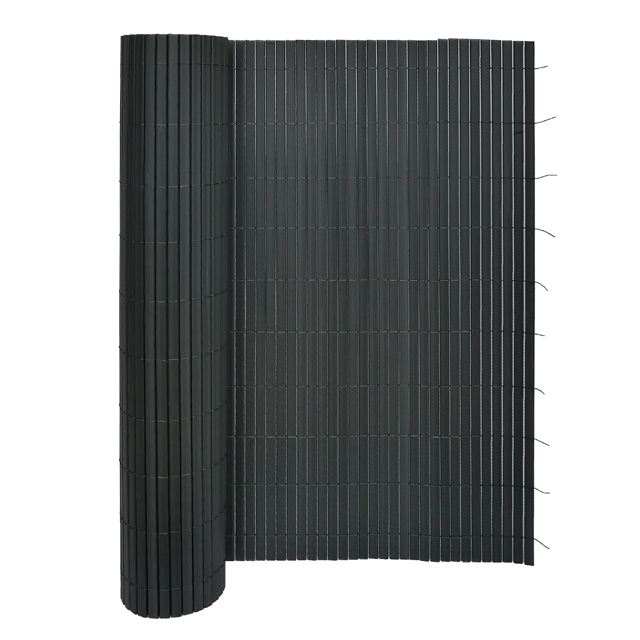
Not all wood fences perform equally. The species and grade of the lumber determine its structural lifespan. Pressure-Treated Pine is the most budget-friendly option. Manufacturers infuse pine with chemical preservatives to resist rot and insects. However, pine is highly prone to warping, twisting, and shrinking as it dries in the sun.
Cedar represents the mid-tier standard. It contains natural oils that resist moisture and repel insects. Cedar remains dimensionally stable, meaning it stays straight and flat much longer than pine. When selecting cedar, you must pay attention to the grade. Clear cedar contains no knots and offers premium longevity, while #2 Common cedar features visible knots that can occasionally fall out as the wood ages.
Redwood and Tropical Hardwoods offer premium longevity. These dense woods resist decay naturally and provide maximum structural integrity. They require a significantly higher initial investment but deliver a lifespan that rivals some synthetic materials.
Wood Species Comparison Matrix
Wood Species | Dimensional Stability | Rot Resistance | Maintenance Needs |
|---|---|---|---|
Pressure-Treated Pine | Low (Prone to warping) | High (Chemically treated) | High (Requires frequent sealing) |
Western Red Cedar | High (Stays flat and straight) | Moderate (Natural oils) | Moderate (Staining recommended) |
Redwood | Very High | High (Natural tannins) | Moderate (Staining recommended) |
Wood offers unmatched adaptability. You can modify a wood fence easily post-installation. If you change your exterior house color, you can simply strip and restain the fence to match. Wood easily adapts to sloped terrain. Installers can cut individual pickets on-site to follow the exact contour of your yard, creating a seamless boundary over rolling hills.
Modern architectural styles increasingly favor horizontal wood fencing. This design creates clean, continuous lines that complement contemporary homes. However, horizontal installations require robust structural framing. Gravity constantly pulls on horizontal boards, increasing the risk of sagging over time.
To build a lasting horizontal wood fence, installers must space posts closer together—typically every four to six feet instead of the standard eight feet. They must also use thicker lumber for the horizontal slats and install vertical center supports to maintain structural integrity.
Wood is a porous, biological material. It acts like a sponge, absorbing rainwater, urban pollutants, and airborne spores. This porous nature allows mold and algae to embed deeply into the grain, requiring aggressive cleaning to remove.
Maintaining wood requires significant labor. Skipping this maintenance cycle accelerates degradation, turning a beautiful asset into an eyesore. A proper wood fence maintenance cycle involves specific steps:
Inspect the entire fence line and replace any severely warped, split, or rotting pickets.
Apply a specialized wood cleaner or oxygen bleach solution to kill embedded mold and algae spores.
Power wash the surface using a wide-angle tip at low pressure (under 1500 PSI) to avoid furring or gouging the wood grain.
Allow the wood to dry completely for at least 48 to 72 hours, depending on ambient humidity.
Apply a high-quality oil-based penetrating stain using a pump sprayer, followed immediately by back-brushing to work the oil deep into the pores.
As wood ages, its natural defenses weaken. Ground-contact points remain highly vulnerable to fungal rot and moisture absorption. Even pressure-treated posts eventually succumb to decay if water pools around the base. Proper grading away from the fence line is critical to extend the life of the posts.
Termite infestations pose a severe risk in warmer climates. Once insects compromise the internal structure of a post, the entire fence section loses its wind-load rating. High winds easily snap weakened posts at the ground line, leading to catastrophic failure during severe storms. Using metal post bases set into concrete footings keeps the wood above grade and eliminates direct soil contact, significantly reducing rot and insect risks.
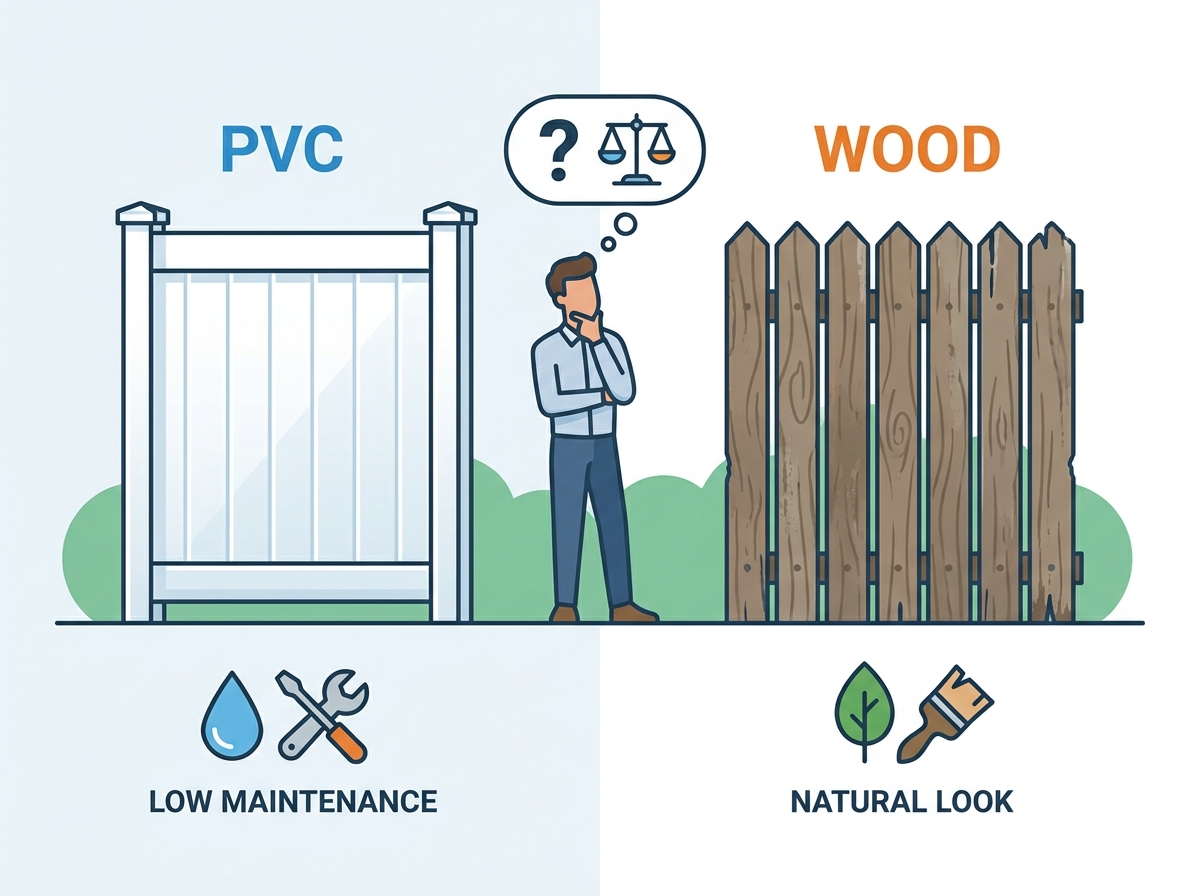
Manufacturing quality dictates the lifespan of a vinyl fence. Virgin PVC utilizes brand-new synthetic polymers. Manufacturers blend virgin vinyl with titanium dioxide, a powerful UV inhibitor. This chemical additive acts as sunscreen for the fence, preventing the plastic from chalking, fading, or degrading under intense sunlight.
Recycled PVC uses repurposed plastics. While environmentally conscious, recycled vinyl lacks consistent structural integrity. It frequently lacks sufficient UV inhibitors. Recycled PVC is highly prone to sagging between posts and becoming dangerously brittle after a few years of sun exposure. When evaluating PVC options, always verify the wall thickness of the extrusions. Premium residential PVC features a wall thickness of at least 0.135 inches, while commercial grades push up to 0.150 inches for maximum impact resistance.
Manufacturers often market PVC as completely maintenance-free. This is inaccurate. PVC is low-maintenance, not zero-maintenance. The non-porous surface prevents moisture absorption, but it still collects surface debris, pollen, and bird droppings.
Algae, mildew, and hard water stains accumulate on the surface, particularly on white PVC in damp climates or near sprinkler heads. You must perform periodic soft-washing using specialized surfactants or a mild sodium hypochlorite mix to remove these biological growths. However, the non-porous nature of vinyl makes it significantly easier to wipe down and sanitize compared to rough-sawn wood. A standard garden hose and a soft-bristle truck brush usually handle the job in a fraction of the time it takes to prep a wood fence.
Decades of intense UV exposure eventually take a toll on even the best virgin PVC. The plastic slowly loses its plasticizers, increasing the risk of brittleness. Freezing temperatures exacerbate this issue. In sub-zero climates, the material contracts and hardens. A simple impact from a snowblower or a heavy ice branch can shatter a frozen vinyl panel.
PVC remains vulnerable to high-velocity impacts year-round. Hailstorms, flying lawnmower debris, or a rogue baseball can easily punch holes in the hollow vinyl. Repairing PVC is difficult. You cannot simply nail up a new picket. Impact damage often requires disassembling an entire fence section, sliding out the damaged interlocking panels, and reassembling the bay with new parts.
PVC locks you into a permanent design choice. You cannot paint or stain vinyl. The color you install is the color you keep. While manufacturers offer textured wood-grain PVC, the patterns often repeat visibly, failing to replicate the authentic look of natural timber. Darker PVC colors absorb more heat, requiring heavier internal reinforcement to prevent warping.
Consumer demand for modern horizontal PVC fencing is growing rapidly. Homeowners want the sleek look of horizontal lines without the maintenance of wood. However, horizontal PVC is harder to source. It requires specialized internal aluminum channels to prevent the long vinyl rails from sagging under their own weight. This heavy-duty internal engineering makes horizontal PVC significantly more expensive than traditional vertical PVC or horizontal wood.
Material Comparison Matrix
Feature | Wood Fencing | PVC Fencing |
|---|---|---|
Installation Flexibility | High. Easy to cut and contour on-site. | Low. Requires precise post spacing and stepped slopes. |
Maintenance Labor | High. Requires regular staining and sealing. | Low. Requires periodic soft washing. |
Acoustic Privacy | Excellent. Dense mass blocks sound waves. | Poor. Hollow panels allow sound transmission. |
Impact Resistance | High. Absorbs blunt force well. | Low. Prone to shattering or cracking. |
Color Customization | Unlimited. Can be painted or stained anytime. | None. Color is permanent upon installation. |
Wood installation is forgiving. Carpenters can make on-the-fly adjustments. If a yard slopes unpredictably, installers simply trim the bottom of the pickets to match the grade. Wood easily navigates tight urban lot lines, existing landscaping obstacles, and irregular property boundaries. You set the posts, run the horizontal 2x4 rails, and nail the pickets. If a post is slightly off its mark, you just cut the rail to fit.
PVC demands absolute precision. The routed holes in the posts dictate exactly where the horizontal rails must sit. The rails feature notched ends that snap into these routed holes. If your post spacing is off by half an inch, the pre-cut rails will not fit, or they will fall out during the first windstorm. Sloped yards require a stepped installation method, which demands meticulous planning, custom routing on-site, and increases specialized labor costs.
Warranty coverage highlights the difference in material confidence. Standard wood warranties rarely exceed one to five years. They typically cover initial workmanship or early onset rot, but they explicitly exclude natural weathering, warping, splitting, or checking. Once the wood leaves the lumberyard, its survival depends entirely on your maintenance routine.
PVC warranties frequently range from 20 years to lifetime limited coverage. Manufacturers guarantee against peeling, flaking, blistering, and abnormal discoloration. However, you must separate marketing claims from realistic structural viability. A lifetime warranty rarely covers severe impact damage, improper installation, or extreme weather events like hurricanes. Always read the fine print regarding wind-load ratings and required internal post stiffeners.
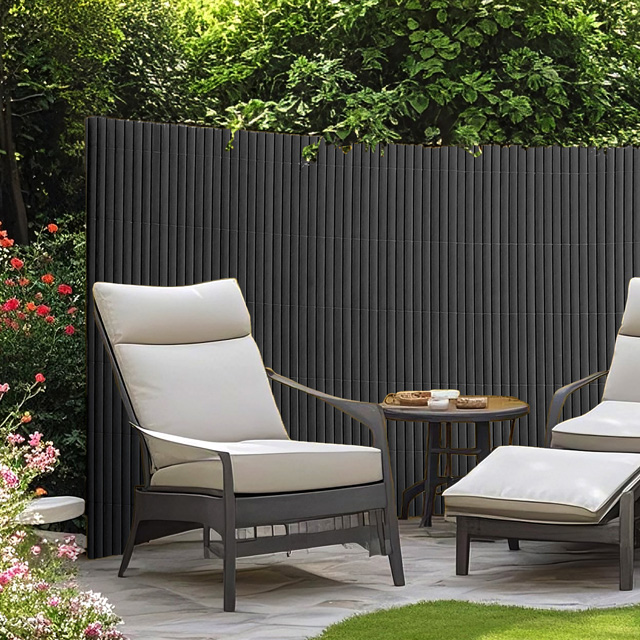
Fences directly impact home appraisals. A poorly maintained, leaning wood fence detracts from property value. Appraisers view it as an immediate liability for the new buyer, often resulting in a lower valuation or demands for repair concessions during closing.
A well-maintained premium Cedar fence or a pristine virgin PVC fence yields a positive return on investment. Clean, structurally sound boundaries signal to buyers that the property is well-managed. Premium materials elevate the overall curb appeal, define outdoor living spaces, and enhance the perceived security of the home.
Wood is a renewable, biodegradable resource. Sustainable forestry practices ensure a continuous supply of lumber. However, the chemical sealants, stains, and strippers required to maintain wood introduce volatile organic compounds (VOCs) into the environment. Pressure-treated lumber also contains copper and chemical biocides that can leach into surrounding soil over decades.
PVC is petroleum-based. The manufacturing process is energy-intensive, and vinyl is notoriously difficult to recycle at the end of its life. Most municipal recycling centers reject PVC fencing, meaning it will sit in a landfill indefinitely. Yet, the extreme longevity of virgin PVC offsets the waste generated by replacing a wood fence two or three times over the same period.
Improper post anchoring guarantees premature fence failure. Frost heave is a severe risk in cold climates. As ground moisture freezes and expands, it pushes concrete footings upward, throwing the entire fence out of plumb and snapping horizontal rails.
You must mitigate this by digging post holes well below the local frost line. If your local frost line is 36 inches, you must dig to at least 42 inches. Belled footings—where the bottom of the hole is wider than the top—prevent the frozen ground from gripping and lifting the concrete. Always place a few inches of crushed gravel at the bottom of the hole before setting the post to allow water to drain away from the base.
For PVC installations, you must use metal post inserts inside the hollow vinyl gate posts and end posts. Without internal aluminum or steel stiffeners, wind-shear forces and the heavy leverage of a swinging gate will snap the vinyl at the ground line. Never rely on concrete alone to fill a hollow PVC post, as the concrete shrinks slightly as it cures, leaving the vinyl unsupported.
Material quality matters little if the installation is flawed. Selecting a competent fencing contractor requires strict vetting. You must verify their specific experience with your chosen material. A crew skilled in rough carpentry may lack the precision required for a stepped PVC installation.
Always check active liability insurance and verify their procedures for marking underground utilities. Ask for addresses of fences they installed five years ago. Inspecting older work reveals their true competency with concrete footings, gate hardware durability, and structural framing. Finally, ensure you understand the warranty transferability if you plan to sell the property in the near future.
Neither material holds a universal advantage. The decision rests entirely on your specific property conditions and your tolerance for ongoing maintenance. Wood delivers classic aesthetics and acoustic privacy but demands relentless upkeep. PVC offers long-term durability and minimal weekend chores but requires a larger upfront budget and strict installation precision.
Choose wood if your upfront budget is constrained, your property features severe grade changes, or you prioritize acoustic privacy. Wood is also mandatory if your HOA rules dictate natural materials or if you prefer changing your exterior color palette over time.
Choose PVC if you plan to stay in the house for over a decade and want to eliminate weekend maintenance chores. It is the superior choice for high-moisture coastal environments, provided you have the initial capital budget to invest in virgin vinyl.
To move forward with your project, take the following actions:
Verify your local zoning laws and HOA covenants regarding allowable materials and height restrictions.
Request an official property line survey to prevent encroachment disputes with neighbors.
Solicit at least three itemized quotes from licensed contractors, requesting separate bids for both premium wood and virgin PVC options.
Inspect the contractor's previous installations to verify their expertise with concrete footings and gate hardware.
For homeowners, contractors, and distributors seeking durable PVC fencing solutions, Kenda is a Shanghai-based manufacturer specializing in precision plastic extrusion, with a product portfolio that includes garden fencing, PVC doors, shutters, and outdoor storage products. Established in 2011, Kenda operates a 56,500 m² manufacturing facility with more than 400 employees and supplies international markets across Europe, Australia, and the Americas.FAQ
A: Wood fences have a distinct upfront cost advantage. The raw lumber and standard installation labor are significantly less expensive than vinyl. However, PVC offers a long-term financial advantage. Because vinyl requires no staining, sealing, or frequent picket replacement, its lifetime maintenance expenses remain incredibly low compared to wood.
A: A properly maintained wood fence typically lasts 15 to 25 years before requiring full replacement. High-quality virgin PVC fencing easily lasts 50 years or more. The lifespan of both materials depends heavily on proper concrete footings, prompt damage repair, and the severity of local weather conditions.
A: Horizontal designs are available in both materials. Horizontal wood is common and easy to build. Horizontal PVC is available but often comes at a premium price. It requires specialized structural routing and internal aluminum channels to prevent the long vinyl rails from sagging under their own weight.
A: Painting PVC is highly discouraged. Vinyl expands and contracts significantly with temperature changes, which causes exterior paint to crack and peel rapidly. Furthermore, applying paint or aftermarket chemicals to a vinyl fence almost always voids the manufacturer's structural warranty.
A: The condition of the fence matters much more than the specific material. A neglected, rotting wood fence lowers property appraisals. Conversely, both a pristine premium cedar fence and a clean, structurally sound PVC fence offer excellent return on investment and elevate overall curb appeal.
A: Extreme cold causes vinyl to undergo thermal contraction. As the temperature drops below freezing, the plastic loses its flexibility and becomes brittle. During sub-zero weather, PVC is highly susceptible to impact damage. A strike from a snowblower or falling ice can easily shatter a frozen panel.


