
Outdoor Storage
Views: 0 Author: Site Editor Publish Time: 2026-08-13 Origin: Site


Synthetic fencing frequently fails in high-sun and wet environments. Property owners in coastal regions and the Southern United States witness this rapid degradation firsthand. Continuous ultraviolet exposure causes structural failure and severe aesthetic decline. Many facility managers specify standard vinyl fencing based on initial estimates, only to face accelerated chalking, fading, and impact-brittleness within three to five years. Darker colors compound these issues through excessive heat absorption and thermal warping.
Not all PVC is manufactured equally. You must evaluate specific chemical formulations to ensure long-term structural integrity. Look for UV stabilizers, co-extruded capstocks, and reflective pigments. These advanced engineering methods guarantee superior PVC fence UV resistance and verifiable long-term value. Understanding these material science principles prevents early replacement cycles and ensures your perimeter remains secure.
Chemical Formulation is Critical: True PVC fence UV resistance relies on high-grade titanium dioxide (TiO2) and specialized UV inhibitors acting as a built-in sunscreen, not just surface-level treatments.
Manufacturing Methods Matter: Co-extruded PVC with an ASA (Acrylonitrile Styrene Acrylate) exterior provides significantly higher color retention and impact resistance compared to mono-extruded alternatives.
Dark Colors Require Advanced Engineering: Specifying dark or wood-grain PVC necessitates reflective pigments to mitigate heat buildup and prevent thermal warping.
Warranty Fine Print Dictates Value: A lifetime warranty is only as strong as its specific clauses regarding acceptable color shift (Delta E) and impact resistance retention in extreme climates.
Table of Contents
Unprotected polyvinyl chloride degrades rapidly under solar radiation. A successful weatherable material must resist this molecular breakdown. Baseline vinyl products lack the necessary chemical defenses to survive long-term exterior exposure. When specifying materials for high-sun areas, the success criteria rely entirely on the polymer's ability to deflect radiation and maintain its original tensile strength over decades. We frequently inspect commercial perimeters where standard-grade vinyl has turned brittle. The panels crack under minimal pressure. A proper specification requires materials engineered specifically for high UV loads. Wind load resistance drops dramatically when the plastic loses its elasticity. A fence that originally met local building codes for hurricane-force winds will fail during a moderate storm if UV degradation has compromised the structural integrity of the posts and rails.
When UV-B radiation hits unprotected PVC, it excites the electrons within the polymer chains. This energy breaks the carbon-chlorine bonds. Free radicals form and react with oxygen in a process called photo-oxidation. The molecular weight of the polymer drops significantly. The material loses its flexibility and tensile strength. It becomes highly susceptible to shattering. Minor impacts from landscaping equipment or hail can easily destroy brittle panels. We see this frequently on older installations where weed trimmers punch holes straight through the bottom rails.
The degradation process generally follows these distinct stages:
Surface energy absorption initiates bond cleavage at the molecular level.
Free radicals react with atmospheric oxygen to form hydroperoxides.
Polymer chains undergo scission, reducing the overall molecular weight.
Micro-cracks develop on the exterior surface, invisible to the naked eye.
Macroscopic embrittlement occurs, leading to structural failure upon impact.
Complete loss of plasticizers leaves a rigid, fragile shell that cannot absorb kinetic energy.
Intense sun and wet conditions accelerate polymer breakdown. Moisture acts as a catalyst during the photo-oxidation process. Water washes away the degraded microscopic surface layer. This exposes fresh, unprotected polymer directly to the sun. The cycle repeats continuously. This combination compounds the rate of degradation compared to dry heat alone. Coastal environments present the highest risk. Salt spray adds another layer of chemical stress to the already weakened material. We constantly replace standard vinyl fences in Florida and coastal Texas because the combination of high humidity and intense UV radiation destroys mono-extruded plastics in a fraction of their expected lifespan.
Chalking occurs when the surface layer of the vinyl degrades completely. A white, powdery residue forms on the fence surface. This powder consists of titanium dioxide and other fillers left behind after the PVC resin breaks down. You can easily wipe it off with your hand. You must differentiate surface oxidation from deep-layer pigment fading. Oxidation washes off, but deep fading permanently alters the material appearance. Once deep fading starts, you cannot restore the original color. The fence looks washed out and inconsistent.
Manufacturers use specific extrusion technologies and chemical additives to combat UV degradation. Surface coatings fail quickly under physical abrasion. True protection requires integrating UV inhibitors directly into the polymer matrix during the manufacturing process. You cannot spray a protective clear coat on a fence and expect it to last twenty years. The defense mechanism must be structural.
Titanium dioxide acts as a powerful, built-in sunscreen. It reflects UV rays away from the polymer matrix. Manufacturers must use the rutile form of TiO2 for exterior applications. The anatase form does not provide adequate protection and actually accelerates degradation under certain conditions. Optimal protection in high-sun climates requires a precise volume of TiO2. Premium profiles usually contain at least ten parts per hundred resin in the outer layer. This high concentration ensures the material deflects harmful radiation before it penetrates the core. When we review material specification sheets, we specifically look for the rutile TiO2 percentage. Anything less than the industry standard indicates a product that will chalk prematurely. We also verify that the material meets ASTM F964 standards, which dictate the minimum performance requirements for exterior vinyl profiles.
Mono-extrusion uses uniform material throughout the entire profile. This method wastes expensive UV inhibitors on the inside of the fence where the sun never hits. Co-extrusion bonds a strong structural core with a specialized outer weatherable layer. The outer layer contains high concentrations of protective chemicals. Co-extrusion remains the industry standard for premium weather resistance. It concentrates protective chemicals exactly where they are needed most. The outer capstock layer typically represents 15 to 20 percent of the total material thickness. This thin but highly concentrated layer acts as an impenetrable shield. The inner core, making up the remaining 80 percent, utilizes high-impact modifiers and virgin PVC resin to provide structural strength. This dual-layer approach ensures the fence can withstand both intense solar radiation and physical impacts from daily use.
Extrusion Method Comparison
Feature | Mono-Extrusion | Co-Extrusion |
|---|---|---|
Material Distribution | Uniform throughout the profile | Specialized outer layer over a structural core |
UV Inhibitor Efficiency | Low (wasted on interior surfaces) | High (concentrated on the exterior) |
Impact Resistance | Moderate (decreases rapidly with UV exposure) | High (core remains protected and flexible) |
Manufacturing Cost | Lower | Higher |
Long-Term Weatherability | Poor in extreme climates | Excellent in high-sun environments |
ASA integration provides massive structural and aesthetic benefits. It replaces the standard PVC outer layer with a highly weatherable polymer. Proprietary blends excel in extreme environments. ASA outperforms standard blends in retaining color over long periods. It strongly resists micro-cracking under intense solar loads. Automotive manufacturers use ASA for unpainted exterior trim. This cross-industry application proves its durability against harsh sunlight and extreme temperature swings. When you specify a dark-colored fence, an ASA capstock is non-negotiable. Standard PVC simply cannot hold dark pigments without degrading.
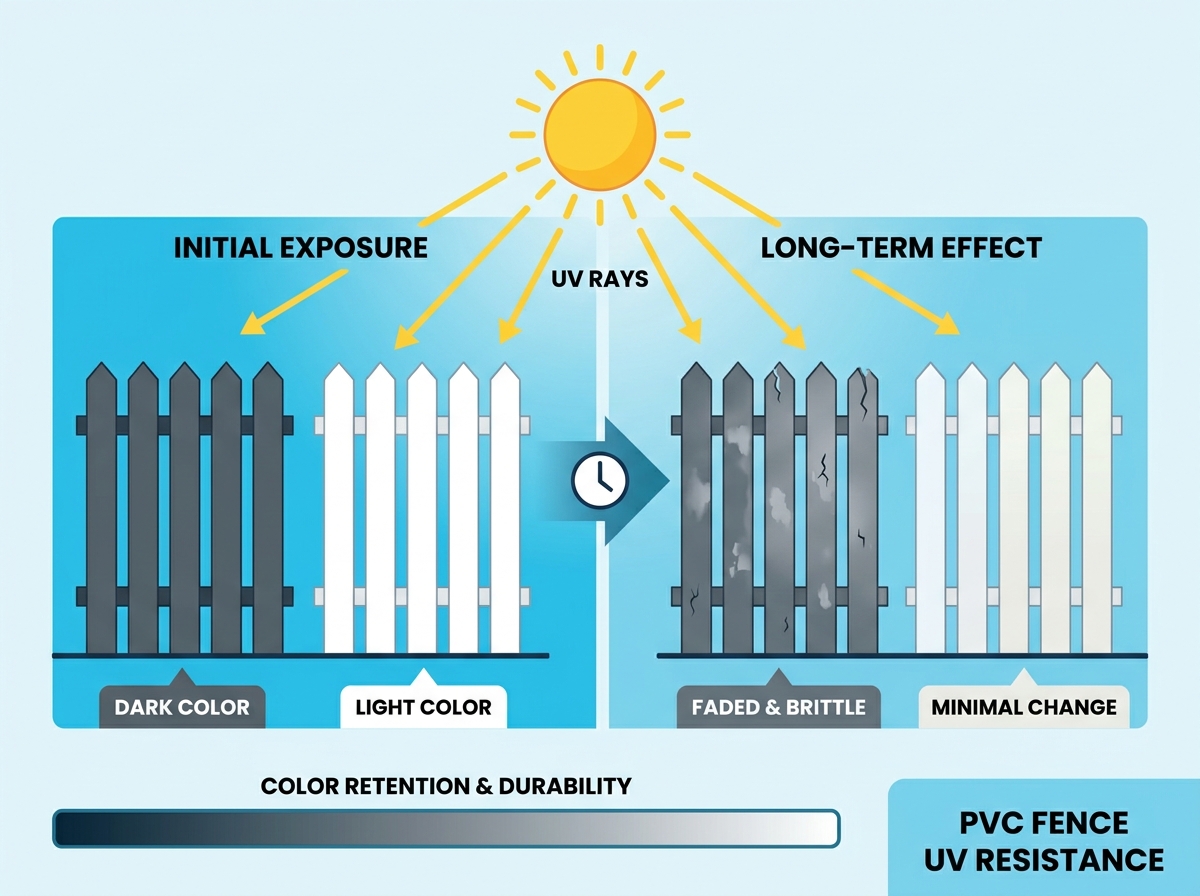
You must connect aesthetic choices directly to physical performance. Selecting a fence color is not just a visual decision. The color dictates how much solar energy the fence absorbs. This absorption directly impacts the structural integrity and the required installation methods. A dark brown fence behaves entirely differently than a white fence under the midday sun.
White and tan PVC feature a high solar reflectance index. They bounce most of the solar energy back into the atmosphere. Black and dark brown PVC absorb significantly more energy. Heat absorption becomes a structural liability when temperatures exceed the material limits. A black fence can reach temperatures fifty degrees hotter than the ambient air. This pushes the vinyl dangerously close to its glass transition temperature. At this point, the material softens and loses its structural rigidity.
Manufacturers use infrared-reflective pigments in colored vinyl. These pigments look dark to the human eye but reflect infrared light effectively. They lower surface temperatures across the entire fence profile. They slow heat buildup and prevent the material from softening. This keeps durability high. Without these specific pigments, dark vinyl would warp and sag within the first summer of installation. We have seen non-reflective dark vinyl literally melt and droop out of the post routs during a heatwave.
Dark colors drive excessive expansion and contraction cycles. A standard eight-foot rail can expand over a quarter of an inch on a hot afternoon. This movement stresses mechanical fasteners and routed joints. If the installation does not account for this movement, the fence will buckle. The rails will push against the posts, causing them to lean or crack under the pressure.
To mitigate thermal expansion risks, installers must follow these specific field practices:
Increase the depth of the post routs to allow for horizontal rail movement.
Notch the ends of the rails rather than using rigid mechanical fasteners.
Leave a minimum of 1/4-inch clearance inside the post for expansion.
Install aluminum stiffeners inside the bottom rails to prevent vertical sagging.
Avoid installing panels during the hottest part of the day to prevent inaccurate measurements.
Use elongated routing holes for any mechanical fasteners to allow the vinyl to slide over the screw shafts without binding.
Generic vinyl from big-box stores degrades quickly. Manufacturers use minimal TiO2 to keep retail costs low. Commercial-grade, UV-stabilized PVC lasts decades. Proprietary formulations outlast generic alternatives by massive margins. You might save money on day one with generic materials. You will spend much more replacing the shattered panels three years later. The labor required to tear out a failed fence and install a new one far exceeds the initial material savings.
Composite blends offer the highest heat stability. Wood fibers mixed with recycled plastics create a dense, rigid board. They resist fading and retain impact strength longer in some specific scenarios. However, premium PVC weighs less and installs faster. Composite fencing requires heavier posts and more robust concrete footings. The sheer weight of composite materials complicates logistics and increases labor time. A two-man crew can install twice as much PVC in a day compared to heavy composite panels.
ASA-capped PVC shows minimal color shift over time. Powder-coated metal finishes often chalk and fade rapidly in coastal environments. Aluminum resists rust, but the powder coat degrades under intense UV exposure. Once aluminum fades, you must repaint it entirely. ASA-capped vinyl requires only basic cleaning to maintain its original appearance. We often replace faded aluminum pool enclosures with high-grade PVC because the maintenance burden of repainting metal is too high for most property managers.
Fencing Material Performance Comparison
Material Type | UV Resistance Level | Heat Absorption Risk | Maintenance Requirement |
|---|---|---|---|
Standard Mono-Extruded PVC | Low to Moderate | High (if dark colored) | Frequent cleaning, high replacement risk |
Co-Extruded PVC (TiO2 Rich) | High | Low (light colors) | Minimal, basic washing |
ASA-Capped PVC | Exceptional | Low (even in dark colors) | Minimal, basic washing |
Composite Blends | High | Moderate | Periodic sealing or specialized cleaning |
Powder-Coated Aluminum | Moderate (prone to chalking) | High | Repainting after finish degrades |
Investing 20 to 30 percent more upfront in UV-resistant formulations pays off heavily. Commercial properties in extreme climates delay replacement by ten to fifteen years. This extended lifecycle justifies the initial specification. Labor costs dominate any fencing project. Paying a crew to install a cheap fence twice costs far more than installing a premium fence once. Superior PVC fence UV resistance eliminates the need for early tear-outs. When you factor in the labor, disposal fees, and site disruption of a replacement project, the ROI on premium materials becomes obvious. Tearing out an old fence requires pulling concrete footings, hauling debris to a landfill, and paying commercial disposal rates. You avoid all these secondary costs by specifying a UV-optimized product from the start.
Read warranty documents carefully for specific UV performance metrics. The Delta E measurement tracks color shift objectively. A lower Delta E number means less visible fading over time. Understand exactly what constitutes an acceptable fade rate under commercial warranties. Watch for exclusion clauses related to sun damage, heat warping, and moisture exposure. Some warranties void entirely if you install a dark fence in a southern climate without proper internal reinforcement. Always demand a copy of the warranty before signing a material order. Look for specific language guaranteeing impact resistance retention after ten years of solar exposure.
Installation practices must adapt to colored PVC realities. Proper rail notching and expansion gaps in posts are mandatory. You must leave room inside the post route for the rail to grow. Rigid installations lead to severe buckling when the material expands under the afternoon sun. Never screw the rails directly to the posts unless specified by the manufacturer for a specific anchor point. We use specialized notching tools to create tabs on the ends of the rails. These tabs lock the rail inside the post while still allowing it to slide back and forth as the temperature changes.
Dark-colored fences absorb more heat and require structural support. Galvanized steel or aluminum inserts in the bottom rails prevent sagging. The metal insert carries the weight of the pickets. The vinyl simply acts as a decorative cover. You must cut the metal insert slightly shorter than the vinyl rail. This prevents the metal from restricting the vinyl's thermal expansion. If the metal insert is too long, it will push against the inside of the post and cause the entire section to bind. In high-wind zones, we also mandate steel inserts inside the vertical posts. This internal skeleton prevents the posts from snapping at the ground line when the vinyl softens under extreme heat.
Use correct cleaning agents to protect the capstock. Avoid abrasive chemicals that scratch the UV-stable surface. Simple soap and water work best. Use a soft-bristle brush to remove dirt and algae. Never use a high-pressure power washer up close. The intense water pressure can strip the protective outer layer and force water into the post joints. We recommend a simple garden hose and a mild automotive wash soap. This cleans the surface effectively without degrading the protective ASA or TiO2 layers.
Standard PVC remains insufficient for high-sun exposure. True longevity requires co-extruded, TiO2-rich, or ASA-capped formulations. Demand technical specification sheets from manufacturers before approving any material. Look specifically for capstock material, pigment types, and Delta E warranty limits to ensure long-lasting performance.
Audit your site's daily solar exposure and moisture levels to determine the necessary level of UV protection.
Consult with a certified commercial installer regarding mandatory expansion gaps and internal rail reinforcements.
Request physical material samples for independent evaluation of the capstock thickness and rigidity.
Review the warranty fine print specifically for Delta E fade limits and climate-related exclusion clauses.
For buyers seeking an experienced plastic extrusion and fencing manufacturing partner, Kenda is a Shanghai-based manufacturer specializing in precision plastic extrusion, supported by a 56,500 m² production facility, more than 400 employees, and 150 production lines. Its product portfolio includes PVC fencing and other outdoor and architectural plastic products, while its international business serves customers across Europe, Australia, and the Americas.
A: All materials experience some weathering. However, high-quality PVC with UV stabilizers and TiO2 acts as a built-in sunscreen. This results in a negligible color shift that remains imperceptible to the naked eye over a decade.
A: Premium colored vinyl utilizes co-extruded ASA capstock and infrared-reflective pigments. These specialized pigments slow heat buildup and deflect harmful radiation, preserving the deep color and preventing structural warping.
A: UV rays cause photo-oxidation, breaking down polymer chains. This results in a loss of plasticizers, leading to severe impact brittleness. The material shatters easily, especially when combined with wet conditions.
A: Composite offers superior structural heat stability due to its dense core. However, premium ASA-capped PVC provides advanced color-retention capabilities and weighs significantly less, making it easier to install.
A: White or light tan offers maximum solar reflectance, keeping the material cool. Dark colors are viable only if engineered with advanced heat-reflective technology and installed with proper metal reinforcement.
A: Use non-abrasive cleaners, mild soap, and a soft brush. Employ low-pressure washing to maintain the integrity of the capstock. High-pressure washing can strip the protective UV layer and damage the surface.


