
Outdoor Storage
Views: 0 Author: Site Editor Publish Time: 2026-08-13 Origin: Site


Chain link fencing offers exceptional durability and structural security. It keeps pets in and intruders out. However, it provides zero visual obstruction or noise reduction. Property owners often face a frustrating dilemma. Tearing down a structurally sound metal framework to build a brand-new wood or vinyl barrier wastes perfectly good materials and requires heavy labor. You need reliable retrofit solutions to block sightlines without compromising the existing framework's structural integrity.
Finding the right chain link fence privacy solution means balancing aesthetic goals, maintenance capacity, and wind load calculations. Adding solid materials to an open-weave mesh fundamentally changes how the structure interacts with weather. Before purchasing materials, you must evaluate post depth, wire gauge, and local zoning laws. The following guide breaks down the exact steps, materials, and structural considerations required to successfully upgrade your current perimeter.
Wind Load is the Primary Risk: Adding solid privacy materials to a chain link fence drastically increases wind resistance; existing posts must be evaluated for depth and stability before installation.
Compatibility Requires Measurement: Not all privacy add-ons fit universally. Knowing your fence's wire gauge and "diamond" (mesh) size is critical before purchasing materials like slats.
Cost vs. Longevity: Fabric mesh screens offer the lowest upfront cost but require frequent replacement, while high-density polyethylene (HDPE) privacy slats require a higher initial investment but offer a 10-to-25-year lifespan.
Aesthetic Transformations are Possible: Homeowners are not limited to industrial-looking slats; options like rolled bamboo, corrugated metal, and overlaying wood panels can completely disguise the underlying chain link.
Compliance Matters: Always verify Homeowner Association (HOA) guidelines and municipal zoning laws, as many restrict specific privacy add-ons like fabric tarps or height extensions.
Table of Contents
Chain link fabric is inherently porous. Manufacturers engineer it specifically to let wind pass freely through the diamond mesh. When you install solid materials over this mesh, you create a massive sail. The wind no longer passes through. It pushes directly against the surface area. This physical change transfers massive amounts of kinetic energy directly to the terminal posts, line posts, and top rails.
Before modifying the structure, inspect the entire perimeter. Push firmly against the terminal posts. These are the thicker posts at corners and gates. They should not wobble or shift in the ground. Check the concrete footings at the base of each post. Cracking, crumbling, or heaving concrete indicates a weak foundation. It will fail under increased wind pressure. Inspect the metal components for severe rust. Surface oxidation is manageable. Deep, flaking rust compromises the steel's load-bearing capacity.
Posts supporting solid privacy barriers must sit in concrete at a depth of at least 24 to 36 inches. This depends on the frost line in your region. Line posts should sit no more than eight to ten feet apart. If your current posts are shallow or spaced too far apart, adding high-opacity materials causes the entire line to lean or collapse during a severe storm. Soil type also plays a role. Sandy soils offer less resistance than heavy clay, requiring deeper footings to counteract the new wind load.
Follow these steps to field-test your framework:
Grab the top rail near a line post and apply heavy lateral force. Watch for ground movement.
Dig down two inches around a random line post to verify the presence and condition of a concrete dome.
Tap the bottom six inches of the posts with a wrench. A dull thud instead of a metallic ring indicates internal rust.
Check the tension bands and carriage bolts on terminal posts. Tighten any loose hardware.
You cannot buy retrofit materials blindly. Privacy slats and mounting brackets fit specific mesh dimensions. The two measurements you need are the mesh size and the wire gauge.
To determine the mesh size, measure the inside diagonal of a single chain link diamond. Place your tape measure inside the wire on one corner. Stretch it directly across to the inside of the opposite corner. Common residential sizes are 2 inches, 2.25 inches, or 2.375 inches. Commercial properties often use smaller mesh sizes for added security.
Next, identify the wire gauge. This refers to the thickness of the steel wire. Lower gauge numbers indicate thicker wire. Standard residential fences typically use 11 or 11.5-gauge wire. Heavy-duty commercial fences use 9-gauge wire. The combination of your mesh size and wire gauge dictates the exact width of the privacy slats you can install. If you buy slats designed for a 2-inch mesh and try to force them into a 2.25-inch mesh, they fit loosely. They will rattle in the wind and eventually slip out of place.
Common Wire Gauge Thicknesses
Gauge Size | Application | Wire Thickness (Inches) |
|---|---|---|
9 Gauge | Commercial / Heavy Residential | 0.148 |
11 Gauge | Standard Residential | 0.120 |
11.5 Gauge | Light Residential / Economy | 0.113 |
Municipalities and Homeowner Associations strictly regulate perimeter structures. Modifying an existing barrier often triggers the same rules as building a new one. Before purchasing materials, verify local height restrictions. Most residential zoning laws cap backyard barriers at six feet. Front yard barriers usually cap at three to four feet. If you plan to use extension brackets to raise the overall height, you risk violating local codes.
HOAs present an additional layer of scrutiny. Many neighborhood associations prohibit materials that look temporary or industrial. Construction-grade mesh screens, mismatched plastic slats, or untreated bamboo rolls often lead to violation notices and fines. Always submit your proposed material samples and installation plans to the architectural review committee before beginning the project. Check for corner lot visibility triangle rules. Cities require clear sightlines at intersections. Adding solid privacy to a corner fence might block driver visibility, forcing you to tear it down.
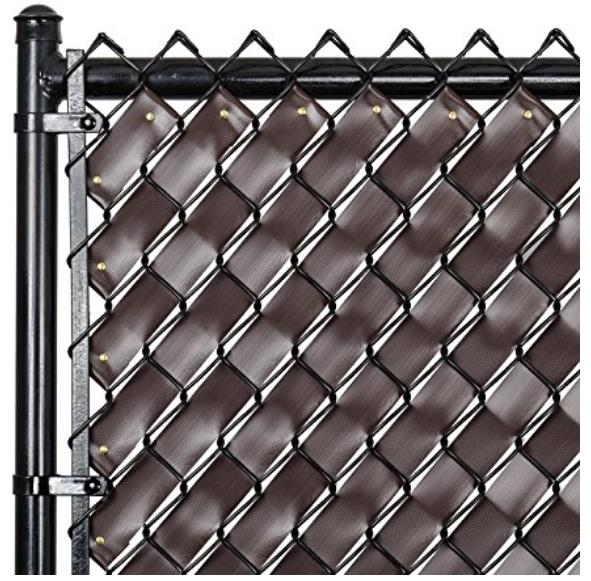
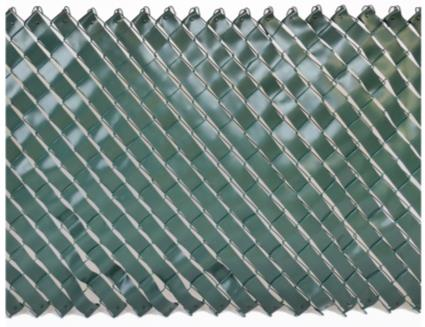
Privacy slats are the most common retrofit solution. Manufacturers extrude these long strips from high-density polyethylene (HDPE) or aluminum. Installation is straightforward but time-consuming. You insert each slat vertically through the top of the chain link diamonds. Weave them down to the bottom. Most modern slat systems utilize a bottom locking channel. You thread this channel horizontally through the bottom of the mesh first. The vertical slats snap into it. This prevents them from sliding down or pulling out.
Depending on the slat width and the inclusion of winged designs, you achieve 75% to 95% visual blockage. Winged slats feature flexible side fins to close gaps. They offer excellent long-term durability. They resist UV fading, impact damage, and extreme temperatures. A quality set of HDPE slats easily lasts 15 to 25 years. Because they still allow a small amount of airflow between the weaves, they are an excellent choice for high-wind areas where completely solid panels would fail.
Installation steps for bottom-locking slats:
Slide the horizontal locking channel through the bottom diamond row across the entire fence section.
Drop the first vertical slat through the top diamond, weaving it downward.
Push the slat firmly until it clicks into the bottom locking channel.
Repeat for every diamond, ensuring the slats sit flush at the top.
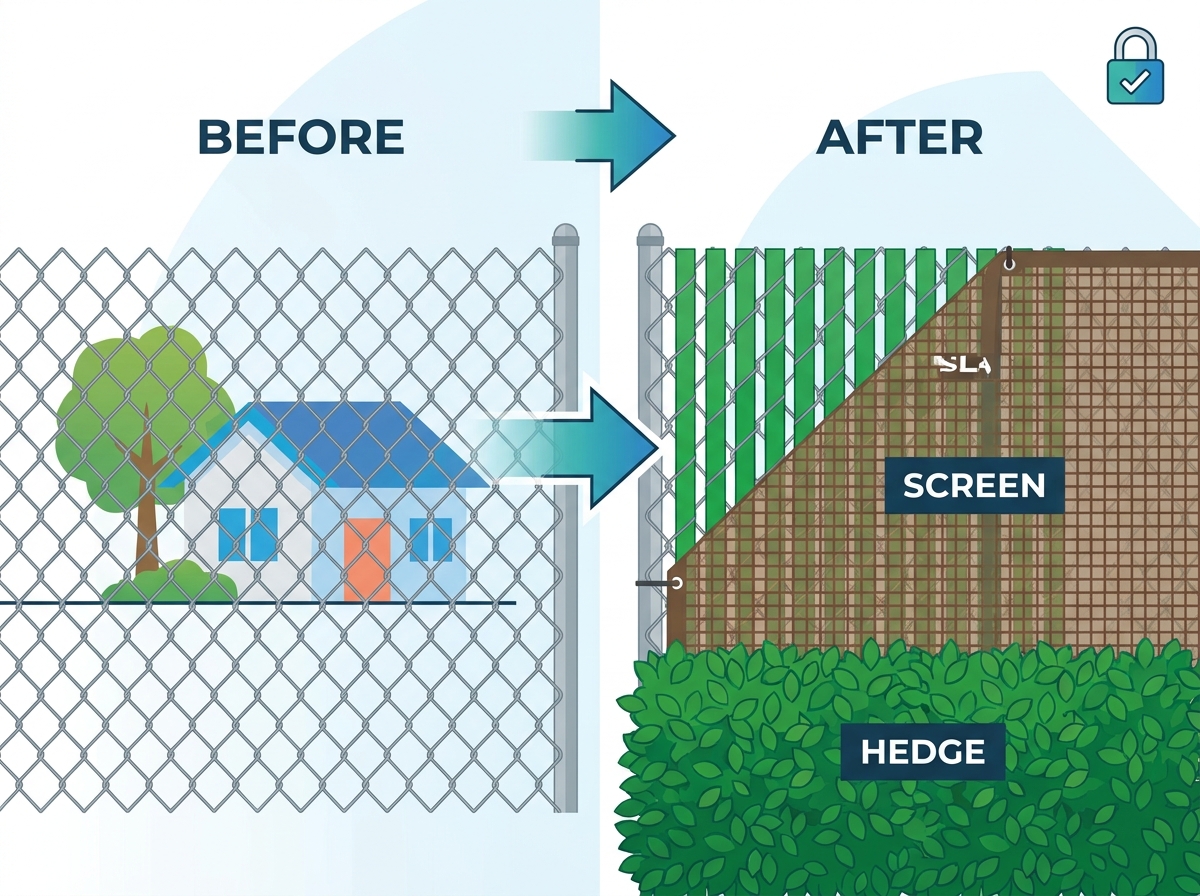
If you need immediate concealment across a large perimeter, fabric mesh screens are the most accessible choice. Factories weave these panels from UV-treated polyethylene. They feature reinforced hems and brass grommets spaced evenly along the edges. You attach the screen directly to the top rail, bottom tension wire, and side posts. Use heavy-duty, UV-resistant zip ties or galvanized hog rings.
Mesh screens provide 80% to 98% opacity. This depends on the density of the weave. They are highly effective at blocking sightlines and reducing dust transmission. However, this is generally a shorter-term solution. Even with UV treatments, constant exposure to direct sunlight and wind whipping causes the fabric to degrade, stretch, or fray. Expect a lifespan of three to five years before replacement becomes necessary. This method suits commercial job sites, tennis courts, or residential properties needing a rapid fix.
To prevent wind damage, look for screens with half-moon wind slits cut into the fabric. These slits allow heavy gusts to pass through without ripping the grommets out of the hem. When installing, always start at one top corner and pull the fabric taut as you work your way down the line. Loose fabric flaps in the wind, which accelerates wear and tear on the grommets.
For properties featuring tropical, zen, or organic landscaping, industrial plastics clash with the environment. Rolled bamboo or willow reed screening offers a natural alternative. These materials come in large rolls held together by galvanized wire. You unroll the material along the existing metal framework. Secure it using stainless steel wire ties directly to the chain link mesh.
Bamboo provides 85% to 95% visual blockage. It instantly softens the harsh look of galvanized steel. The primary drawback is longevity. Natural materials are highly susceptible to weather conditions. Rain, snow, and ground moisture eventually cause rot. Intense sun bleaches the wood. Depending on your climate, bamboo or reed screens typically last two to five years. Split reed is thinner and degrades faster than full round bamboo poles.
Keep the bottom edge elevated slightly above the soil line. This helps extend their lifespan by preventing moisture wicking. Never let bamboo sit directly in mud or mulch. Use heavy-gauge wire ties rather than plastic zip ties, as the sharp edges of the bamboo can slice through plastic over time.
Some property owners want the classic look of a traditional privacy barrier without the labor of digging new post holes. You can achieve this by mounting wood pickets, horizontal cedar planks, or solid vinyl panels directly onto the existing metal framework. This requires specialized steel brackets. These brackets clamp onto the round metal posts and provide a flat flange for attaching wooden 2x4 rails.
Once you bolt the horizontal wood rails to the metal posts, you can nail or screw traditional vertical pickets across the entire span. This method provides 100% visual blockage. It completely hides the original metal structure from the inside of the yard. A well-constructed wood overlay lasts 10 to 20 years with proper staining and sealing.
This method adds immense weight and wind resistance. You must be absolutely certain your existing metal posts anchor deeply in solid concrete before attempting this full transformation. Use heavy-duty carriage bolts to secure the rails. Standard deck screws will shear off under the weight of the panels. Ensure your 2x4 rails are pressure-treated to resist rot, even if you use cedar for the visible pickets.
Corrugated steel or aluminum panels offer an ultra-durable, modern aesthetic. Often used in contemporary architectural designs, these panels attach horizontally or vertically to the existing metal rails. Installation involves using U-brackets and self-tapping screws with rubber washers. You secure the metal sheets directly to the framework.
This approach delivers 100% opacity and maximum security. Corrugated metal is nearly impossible to climb. It is highly resistant to impact. It easily lasts 20 to 30 years with zero maintenance. The primary concern with this method is the sharp edges of the metal panels. You must install a protective cap rail along the top edge to prevent injury. Choose 26-gauge or 29-gauge metal panels for the best balance of weight and rigidity.
Metal panels reflect heat. This raises the temperature of the adjacent yard space during summer months. Keep plants and outdoor furniture a few feet away from the metal surface to prevent heat damage. Overlap the vertical seams by at least one full rib to prevent light gaps and ensure a watertight barrier. Use screws with neoprene washers to prevent rust from forming at the penetration points.
Blending the perimeter into the garden is a popular strategy. Planting aggressive climbing vines like Clematis, English Ivy, or Star Jasmine allows nature to weave through the mesh. Over time, the foliage creates a dense, living wall. Alternatively, you can purchase panels of artificial ivy or boxwood. These zip-tie directly to the mesh for instant results.
Live greenery requires patience. It takes several growing seasons to achieve full coverage. It also requires diligent pruning to keep the vines from overtaking adjacent trees or structures. Live plants trap moisture against the metal wire. This accelerates rust on older, non-vinyl-coated fences. The sheer weight of mature ivy can also pull down a weak top rail.
Artificial greenery avoids the moisture and maintenance issues. It provides instant 90%+ opacity. Lower-quality faux plants fade quickly under harsh UV exposure. Look for commercial-grade artificial panels with built-in UV inhibitors to prevent the leaves from turning blue or brittle after a single summer. Secure the panels every twelve inches to prevent wind from tearing them off the wire.
When selecting a chain link fence privacy method, you must weigh the initial material investment against the expected lifespan. Cheaper materials often require multiple replacements over a decade. Premium materials are a one-time installation.
Comparison of Privacy Modification Methods
Privacy Method | Initial Investment | Expected Lifespan | Maintenance Level |
|---|---|---|---|
Fabric Mesh Screens | Low | 3 - 5 Years | Low (Occasional zip-tie replacement) |
HDPE Privacy Slats | Moderate | 15 - 25 Years | Zero Maintenance |
Bamboo / Reed Rolls | Moderate | 2 - 5 Years | Medium (Monitoring for rot/wire failure) |
Corrugated Metal Panels | Premium | 20 - 30+ Years | Zero Maintenance |
Wood Overlay (Pickets) | Premium | 10 - 20 Years | High (Staining, sealing, board replacement) |
Beyond the primary materials, factor in the hidden costs of specialized installation tools. Attaching mesh screens efficiently requires hog ring pliers. Mounting wood panels requires specialized pipe-grip brackets and heavy-duty carriage bolts. Corrugated metal demands high-quality self-tapping screws and a heavy-duty drill. These auxiliary hardware items add up quickly when modifying a long perimeter.
The set-it-and-forget-it nature of HDPE slats and corrugated metal panels makes them highly attractive for busy property owners. Once installed, they require nothing more than an occasional rinse with a garden hose. The plastics feature UV inhibitors to prevent brittleness. The metal panels are galvanized or powder-coated to resist rust.
Natural materials demand ongoing attention. Wood overlays require power washing and re-staining every few years to prevent rot and warping. Bamboo rolls inevitably break down at the base where they contact damp soil. Live vines require seasonal pruning, fertilizing, and pest management. If you choose a high-maintenance option, ensure you have the time and physical ability to keep the barrier looking pristine year after year.
Upgrading your perimeter changes the entire feel of your outdoor space. Fabric screens often look utilitarian. They suit side yards or areas hidden by large shrubs. Bamboo adds a distinct tropical texture that pairs well with pools and patios. Wood and corrugated metal provide a substantial, architectural presence. This increases the perceived value of the property.
From a security standpoint, solid overlays like wood and metal perform best. They completely eliminate sightlines. They prevent passersby from seeing pets, children, or valuable equipment. They also eliminate the toe-holds provided by the open diamond mesh. This makes the structure significantly harder to climb. Slats and mesh screens obscure the view but do not alter the physical climbability of the original wire.
Take the following steps to begin your perimeter upgrade:
Measure your existing mesh diamonds and wire gauge with a tape measure to determine exact hardware compatibility.
Dig a small test hole next to a line post to verify the concrete footing extends at least 24 inches deep.
Submit your chosen material samples and height specifications to your HOA architectural review board for written approval.
Purchase specialized installation tools, such as hog ring pliers or pipe-grip brackets, before ordering the primary privacy materials.
For buyers seeking durable garden fencing and outdoor privacy products, Kenda brings its experience in precision plastic extrusion to a broad range of fencing and outdoor product solutions. With large-scale manufacturing capabilities in Shanghai, the company serves international customers across Europe, Australia, and the Americas.
A: Yes, but you must purchase slats specifically designed for diagonal insertion. Standard vertical slats will not fit properly if the mesh is oriented differently. Always match the slat design to the exact orientation and diamond size of your existing wire.
A: It can. Privacy screens block wind, turning the fence into a sail. If your posts are not set deep enough in concrete, high winds cause the posts to bend or the entire line to blow over. Always check post stability first.
A: Fabric mesh privacy screens are the fastest solution. You unroll the fabric and attach it to the top rail and side posts using heavy-duty zip ties. A two-person team can cover 100 feet of perimeter in just a few hours.
A: Standard HDPE slats offer minimal noise reduction. While they block sightlines, sound waves easily pass through the small gaps between the plastic and the wire. For actual noise reduction, you need dense, solid mass like heavy wood panels.
A: Keep the bottom edge of your screen or slats at least two inches above the ground. Apply a thick layer of mulch or install a gravel trench directly under the fence line to suppress weed growth and protect the materials from trimmers.
A: Yes. Painting older, rusted galvanized steel with a rust-inhibiting exterior metal paint improves the overall look and extends the metal's lifespan. Wire-brush loose rust and apply a metal primer before painting. Let it cure completely before attaching screens.


