
Outdoor Storage
Views: 0 Author: Site Editor Publish Time: 2026-08-13 Origin: Site


Upgrading a chain link fence often starts with a simple goal: blocking the view. However, property owners frequently fall into a common procurement trap. They assume privacy slats are sold by a universal standard. This assumption inevitably leads to costly over-ordering or project-stalling shortages. Matching your linear footage with specific mesh sizes, wire gauges, and slat styles requires precision. Guessing bag counts wastes budget and results in mismatched coverage across your fence line.
You need a systematic approach to quantify materials before starting the project. This guide provides the exact variables, formulas, and a manual privacy slat calculator framework. Using this methodology ensures accurate ordering, proper sourcing, and seamless installation. We will walk through how to measure your fence correctly, account for structural limitations, and choose the right product for your specific privacy goals without overcomplicating the math.
Mesh Size Dictates Quantity: A 2-inch mesh requires more slats per linear foot (typically 82 per bag) than a 2 ¼-inch mesh (typically 78 per bag).
Standardized Bag Coverage: Despite varying slat counts per bag, industry-standard packaging is designed to cover exactly 10 linear feet of fence.
Coverage vs. Style: Depending on the style chosen, visual blockage can range from a baseline of 60% for basic slats up to 95% for premium winged slats, without altering the required bag count.
Wind Load Reality: Maximizing privacy coverage exponentially increases wind resistance, requiring an assessment of fence post stability before ordering.
Table of Contents
You must establish baseline metrics before making any purchasing decisions. Guesswork leads to delays on the job site. Gathering precise measurements ensures your materials match your existing infrastructure perfectly. A chain link fence looks uniform from a distance, but the specific dimensions of the wire and the spacing dictate exactly what materials you can install.
Measure the total length of the fence line accurately. Use a 100-foot fiberglass measuring tape or a professional measuring wheel. Walk the entire perimeter of the fence. You must exclude gate openings from this primary measurement. Gates require separate calculations because their frames interrupt the continuous chain link mesh. Add the length of each distinct fence run together to find your total linear footage.
Account for grade changes and stepped fencing during your measurement phase. Fences installed on slopes often require varied material lengths. If your fence steps down a hill, measure each horizontal section individually. You may need to order multiple slat lengths to accommodate these height variations. Accurate linear footage is the foundation of your material order.
Follow these steps to get an accurate linear footage reading:
Start at the main terminal post (corner or end post) and anchor your tape measure.
Walk the tape down the line, keeping it pulled tight and level.
Stop at the first gate post and record the measurement.
Skip the gate opening entirely.
Resume measuring from the opposite gate post to the next corner or end post.
Add all recorded sections together to get your gross linear footage.
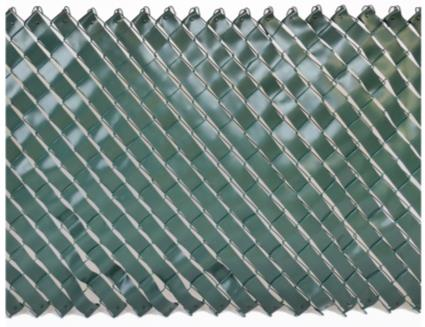
You must determine the exact size of your chain link diamonds. The industry standard method for measuring mesh requires precision. Measure diagonally inside the diamond from wire to wire. Do not measure straight across horizontally or vertically. Place your tape measure on the inside edge of one wire and extend it to the inside edge of the opposite parallel wire.
This diagonal measurement is the most critical variable in any reliable privacy slat calculator formula. It directly determines slat width compatibility. If you order slats designed for a 2-inch mesh and install them in a 2.25-inch mesh, they will fit loosely and rattle in the wind. Conversely, oversized slats will not fit into a smaller mesh. This measurement also dictates the insertion friction you will experience during installation.
Common mesh sizes you will encounter in the field include:
2-inch mesh: The standard for most commercial and modern residential fences.
2-1/4 inch mesh: Common on older residential fences and economy-grade installations.
2-3/8 inch mesh: Often found on very old residential properties or agricultural fencing.
1-3/4 inch mesh: Typically used for tennis courts or pool code compliance.
Wire thickness impacts the internal diamond space significantly. Chain link fences typically use 9-gauge, 11-gauge, or 11.5-gauge wire. A 9-gauge wire is thicker and heavier, commonly used in commercial or heavy residential applications. An 11-gauge or 11.5-gauge wire is thinner and standard for basic residential fences. The gauge directly affects the physical opening available for the slat.
Heavier gauge wire reduces the internal opening of the diamond. Even if two fences share a 2-inch diagonal measurement, the 9-gauge fence has less open space than the 11.5-gauge fence. This reduced space potentially restricts the use of thicker, heavy-duty slats. Always verify that your chosen slat style is compatible with both your mesh size and your wire gauge. Pushing a rigid slat into a tight 9-gauge mesh requires significantly more force and slows down installation.
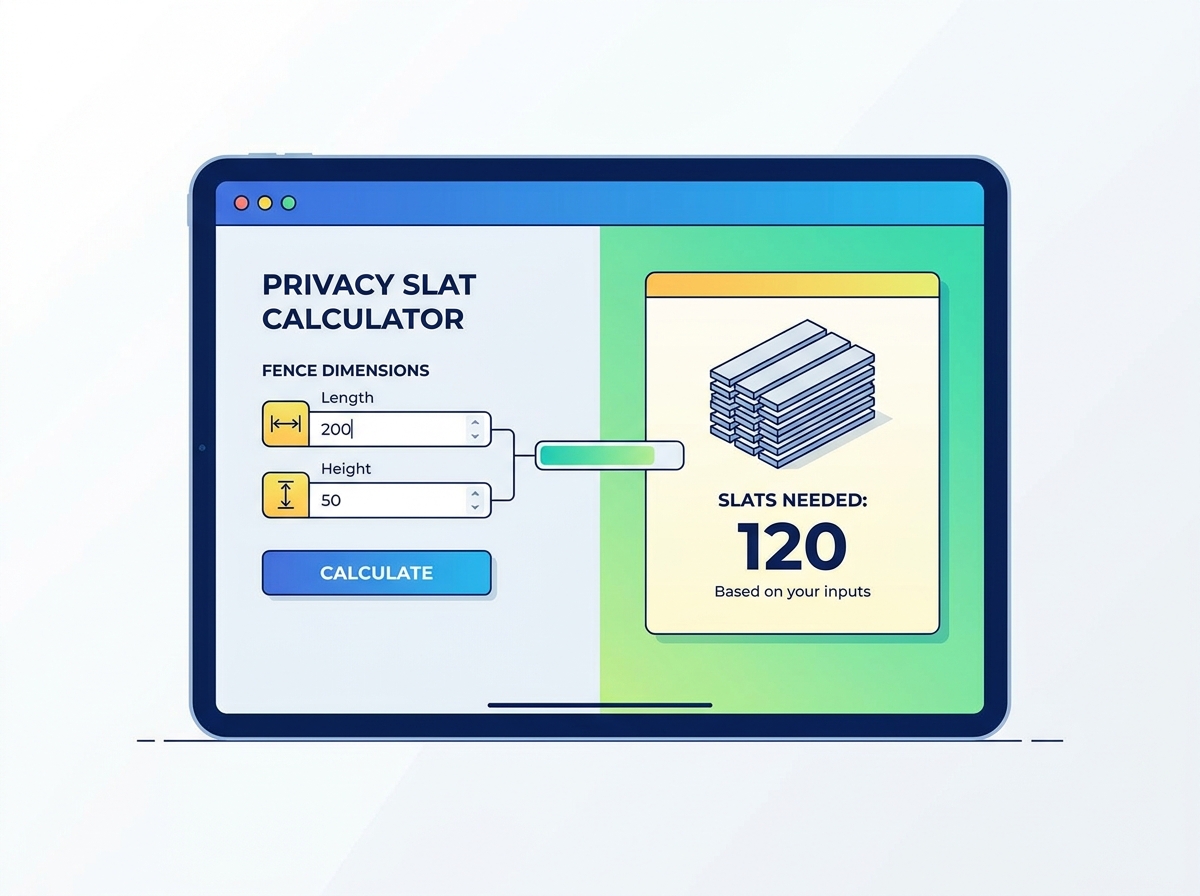
You need a foolproof, step-by-step mathematical framework for determining exact bag counts. This manual calculation prevents the common errors associated with estimating bulk materials. Relying on visual estimates always leads to a shortage of materials on the last day of the job.
The industry standardizes packaging to simplify the ordering process. The standard formula is straightforward: Total Linear Feet ÷ 10 = Base Bags Required. Regardless of the individual slat count, manufacturers design one bag to cover ten linear feet of fence.
Consider a calculation example for a standard residential project. Assume you measured a 155-foot fence line. You divide 155 by 10. The result is 15.5 bags. This number represents your absolute baseline requirement before factoring in waste or mesh variations.
Let us look at a larger commercial example. You have a perimeter of 420 feet. You have two 12-foot double drive gates and one 4-foot walk gate. First, subtract the gates (28 feet total). Your working linear footage is 392 feet. Divide 392 by 10. Your baseline requirement is 39.2 bags.
You must understand the specific slat counts per bag based on your mesh size. A 2-inch mesh features tighter diamonds. Therefore, it requires more individual pieces to cover the same distance. A bag designed for a 2-inch mesh typically contains 82 slats. A 2 ¼-inch mesh features wider diamonds. A bag designed for this size typically contains 78 slats.
While the slat count changes, the 10-foot coverage rule generally remains constant. The manufacturer adjusts the width of the slat to match the mesh. You simply need to ensure you order the correct slat width for your corresponding mesh. If you do this, the basic division formula holds true. Do not try to mix and match slat widths on the same fence line.
Never order the exact mathematical minimum. Always round up partial bags to the next whole number. In our previous residential example, 15.5 bags immediately becomes 16 bags. You cannot purchase half a bag from a supplier.
Add a 5% contingency to your total order. You will inevitably encounter damaged slats during installation. You might mismeasure a section or break a slat while forcing it past a bent wire. You also need spares for future repairs. Minimum order requirements often dictate buying one full extra bag anyway. Factor this contingency into your final procurement list to avoid expensive secondary shipping charges.
Here is how to apply the 5% rule on the job site:
Take your rounded-up base bag count (e.g., 40 bags).
Multiply by 0.05 to find the contingency amount (40 x 0.05 = 2 bags).
Add the contingency to the base count (40 + 2 = 42 bags).
Place your final order for 42 bags.
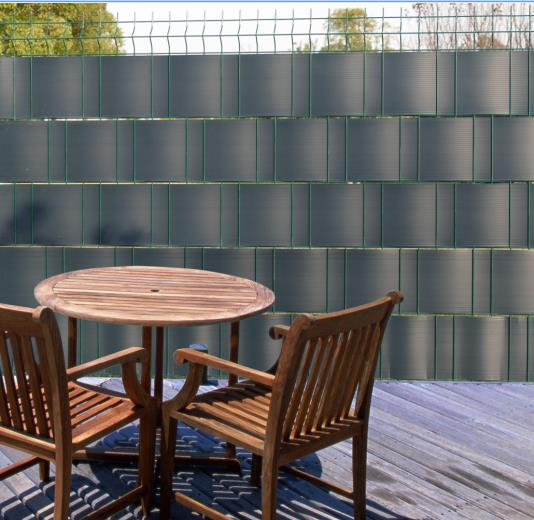
Different product categories affect your primary success criterion: visual blockage. You must evaluate how each style performs before committing to an order. The physical design of the slat dictates how much light and visibility passes through the chain link mesh.
Analyze standard vertical slats for baseline affordability and function. These are typically hollow, extruded high-density polyethylene (HDPE) tubes. They slide down the chain link diamonds and lock into a bottom channel. They are the most common and economical choice for residential upgrades.
You must accept certain visibility trade-offs with this style. Basic or undersized slats may only block around 60% of the open area. You can still see shapes and movement clearly through the fence. Properly fitted standard slats perform better. They generally leave 15-25% of the area visible. They provide moderate privacy but do not create a solid wall. They are excellent for defining property lines without completely blocking airflow.
Evaluate winged slats as the top choice for maximum privacy. These products feature a solid core body. They have flexible, serrated wings extending from both sides. These are engineered specifically for high-visibility areas where blocking the line of sight is the primary objective.
The mechanics of winged slats are highly effective. The serrated or flexible wings overlap within the mesh diamond. They physically close the visual gaps left by standard tubular slats. When installed correctly, they achieve up to 95% visual blockage. They turn a transparent chain link fence into a nearly solid visual barrier. Because they grip the wire directly, they rarely require a bottom locking channel.
Assess faux-foliage slats if you want a unique aesthetic. These products mimic the look of a natural evergreen hedge. They consist of a stiff wire core covered in PVC pine needles. They weave vertically into the chain link mesh.
While they offer a distinct look, their coverage is often less uniform than rigid plastic options. The needles can compress or shift, creating gaps. They can degrade faster under intense UV exposure. Standard HDPE options typically offer superior longevity and more consistent privacy over a ten-year lifespan. Hedge slats also trap debris and leaves, requiring more frequent maintenance.
Chain Link Privacy Slat Style Comparison
Slat Style | Typical Coverage | Locking Mechanism | Wind Load Impact |
|---|---|---|---|
Basic Tubular | 60% - 75% | Bottom Channel | Moderate |
Standard Tubular | 75% - 85% | Bottom Channel | High |
Premium Winged | 90% - 95% | Self-Locking Friction | Very High |
Faux Hedge | Variable (70% - 90%) | Friction Fit | High |
Maximizing privacy carries secondary consequences. You must evaluate the structural impacts and decide where to procure your materials effectively. Adding solid material to a wire fence changes how the fence interacts with the environment.
Compare the cost delta between standard slats and premium winged slats. Achieving a solid visual barrier requires more raw material and complex manufacturing. Winged slats use significantly more plastic than hollow tubular slats. This increased material usage translates directly to a higher upfront cost.
A 10-35% increase in privacy often justifies a 30-50% increase in material costs depending on the site requirements. If your goal is simply to obscure a messy neighbor's yard, standard slats suffice. If you need to block the view of a busy highway or secure a commercial yard, the premium investment in winged slats is necessary. You must weigh the visual requirement against the project budget before running your final privacy slat calculator numbers.
Detail the structural physics of your project. Chain link fences are designed to let wind pass through freely. Converting a porous chain link fence into a solid sail dramatically increases wind load. Achieving 95% coverage means your fence now catches almost all the wind force hitting it.
Evaluate the depth and concrete footing of existing line posts. Do this before installing high-coverage winged slats in high-wind zones. A standard fence with posts driven into dirt will likely blow over during a severe storm once fully slatted. Ensure your posts are set deep in concrete and spaced appropriately to handle the increased structural stress. If your line posts are spaced 10 feet apart and only driven into the soil, you cannot safely install 95% coverage slats.
Post Requirements for High-Coverage Slats
Fence Height | Recommended Line Post Diameter | Recommended Concrete Depth |
|---|---|---|
4 Feet | 1-5/8 Inch to 2 Inch | 24 Inches |
5 Feet | 2 Inch | 24 to 30 Inches |
6 Feet | 2 Inch to 2-3/8 Inch | 30 to 36 Inches |
8 Feet | 2-1/2 Inch to 3 Inch | 36 to 42 Inches |
Compare big-box hardware stores versus specialized fencing suppliers. Big-box stores prioritize shelf space and inventory turnover. They often carry limited, one-size-fits-most inventory. Purchasing these generic slats often leads to rattling, loose fits, or poor coverage because they are designed to loosely fit multiple mesh sizes rather than fitting one size perfectly.
Specialized suppliers fulfill exact mesh-matching requirements. They handle the specific bulk orders generated by your calculations. They stock the correct widths for 2-inch, 2.25-inch, and 2.375-inch meshes. Sourcing from a dedicated supplier ensures your materials fit your fence perfectly. They also carry the necessary replacement parts, bottom channels, and matching gate hardware that big-box stores ignore.
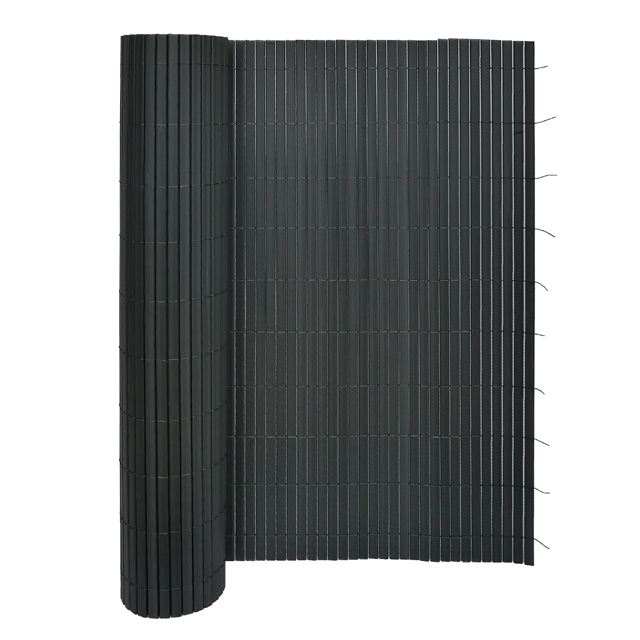
Execution risks exist on every job site. Practical tips help the installer avoid common installation pitfalls. Knowing how to handle the material in the field saves hours of frustration.
Compare the installation experience across the three main styles. Standard tubular slats usually require threading a bottom-lock channel horizontally through the fence before dropping the vertical pieces in. This requires patience and alignment. You must weave the plastic channel through the bottom diamond of the fence, ensuring it stays level.
Some systems use snapping top-locking mechanisms. These are easier to install but leave a visible plastic rail at the top of the fence. Premium winged slats often utilize a self-locking design. They require friction-fit insertion. You push them down, and the wings grip the wire knuckles, eliminating the need for separate locking channels. This speeds up the process but requires more downward force per slat.
Address the reality of installing slats into older chain link. Bent, rusted, or crushed diamonds create severe bottlenecks. The slats will not slide smoothly through damaged sections. A single bent knuckle will stop a rigid HDPE slat dead in its tracks.
Walk the fence line and inspect the mesh before you begin. Use heavy-duty pliers or a flathead screwdriver to straighten bent diamonds. Open up crushed knuckles. Avoid forced insertion at all costs. Forcing the material bends and permanently creases the HDPE slats, ruining their appearance and structural integrity. If you encounter heavy friction on winged slats, spraying a light mist of soapy water on the wire can help them slide into place.
Troubleshooting Binding Slats:
Stop pushing immediately when you feel heavy resistance.
Pull the slat back up a few inches.
Inspect the wire diamond directly below the slat for bends or burrs.
Use pliers to bend the wire back into a uniform diamond shape.
Re-insert the slat gently to test the clearance.
Explain the difficulty of threading the bottom locking channel on uneven terrain. The channel must remain relatively straight for the vertical slats to lock into it securely. If your fence follows a rolling slope, the continuous channel will bind and warp.
Maintain a level locking mechanism by adapting to the terrain. When the fence follows a slope, cut the bottom channel at each line post. Step the channel down gradually rather than trying to bend it continuously. This keeps the vertical slats plumb and ensures they lock securely into the base. If you force a continuous channel over a steep grade, the vertical slats will pop out during the first temperature swing.
Set realistic expectations for installation speed. Slating a fence is repetitive, manual labor. Estimating time per 10-foot section helps you plan your schedule accurately.
A single installer working on a fence in good condition can usually complete a 10-foot section in 15 to 20 minutes. Two installers working together speed up the process significantly. One person feeds the slats from the top while the other guides them into the locking channel at the bottom. Plan your labor hours based on the total linear footage generated by your initial calculations. A 200-foot fence will take a solo installer roughly 5 to 7 hours of continuous work.
Measure your fence diagonally today to determine your exact mesh size. Calculate your total linear footage, strictly excluding all gate openings. Apply the 10-foot per bag rule to find your base quantity. Add a 5% contingency to your final order for waste and future repairs. Source high-quality HDPE materials from a specialized supplier rather than relying on generic big-box store inventory.
For buyers looking for reliable privacy fencing products and scalable manufacturing support, Kenda has specialized in precision plastic extrusion since its establishment in Shanghai in 2011, supported by a 56,500 m² manufacturing facility, more than 400 employees, and 150 production lines. Its broader product portfolio includes fencing and garden privacy solutions, with chain-link privacy fence kits and privacy slats available for residential, commercial, and outdoor screening applications.
A: The exact count depends on the mesh size the slats are designed to fit. Typically, a bag contains 82 slats for a 2-inch mesh and 78 slats for a 2 ¼-inch mesh. Regardless of the individual piece count, both variations are packaged to cover exactly 10 linear feet of fence. Remember to account for the standard one-bag minimum order when purchasing.
A: You must measure the inside diagonal distance of the chain link diamond. Place your tape measure on the inside edge of one wire and measure straight across the diamond to the inside edge of the parallel wire. Do not measure vertically or horizontally. This diagonal measurement ensures you order the correct slat width.
A: No, the calculation remains the same. Bag counts for winged slats are still based on the standard 10-linear-foot coverage rule. While the slats themselves are wider and feature flexible fins to provide 90-95% coverage, the manufacturer packages them to cover the same 10-foot distance as standard tubular slats.
A: You can, but it is highly discouraged. Installing standard slats designed for smaller meshes into an oversized 2 3/8 inch mesh results in a very loose fit. The slats will rattle loudly in the wind. The privacy coverage will drop significantly, often falling to 60% or lower due to the large gaps between the plastic and the wire.
A: Privacy slats add massive wind load to a fence. Increasing coverage from 0% to 90% or higher effectively turns a porous wire fence into a solid barrier. This acts like a sail during high winds. You must ensure your fence features sturdy line posts set deeply in concrete to prevent blow-overs during severe storms.
A: Specialized fencing suppliers are the best source. They carry specific slat widths designed to match exact mesh measurements perfectly. Big-box hardware stores typically only stock generic, one-size-fits-most options. Buying from a dedicated supplier ensures a tight fit, prevents rattling, and provides the highest possible privacy coverage for your specific fence.


